

Many people who are generally pretty good at making it to work on time, or showing up to dinner invitations, have no problem skipping church. A Pew Research poll found that while 33% of Americans attend at least monthly, the vast majority of Americans attend church a few times a year or less. In addition to this, the post-Covid trend of virtual “online” services has resulted in a new kind of communion with the body of Christ mediated by a computer or television screen. Twenty-three percent of Americans report that they’ve participated in virtual worship in the last month. These more recent findings also reveal a slight drop in church attendance since Pew’s prior 2014 study.
Getting the faithful out of bed and into a pew (or seat) on Sunday morning has long been a struggle for church leaders. This isn’t a new problem, but one which revivalist and church-growth gurus of the last century have sought to address. As a Christian pastor, I also want to see worship spaces filled with the saints, not because I’m obsessed with numbers, but because I believe that Sunday worship is one of the most important things a follower of Jesus can participate in during the week. Admittedly, I feel like I’m in something of the minority here, even among preachers. The mantra you don’t go to church, you are the church has helped to fuel the idea that going to church isn’t as important as being the church. But we can’t be the church without doing the things Jesus calls us to in his word, including actually going to church!
The church today must recover a solid biblical vision of worship. If we don’t, our worldly worship will be left to compete with the rest of the goods this world has to offer.
Consider the exhortation given to Christians in the first century by the author to the Hebrews, “Let us hold fast the confession of our hope without wavering, for he who promised is faithful. And let us consider how to stir up one another to love and good works, not neglecting to meet together, as is the habit of some, but encouraging one another, and all the more as you see the Day drawing near” (Hebrews 10:23–25, ESV). At least according to this author, Christians need more fellowship—not less—as Jesus’ return draws closer. The habit of neglecting church is as old as the apostolic era, and rather than invent new and more exciting forms of worship in order to entice people, we should think back to some of the ancient and inspired reasons given in the New Testament for why Sunday worship matters.
Just looking at that text in Hebrews, it’s clear that meeting is a key component of being the church. It’s as we come together that we are “stirred up” to live the kinds of lives of charity that Jesus calls us to. Love and good works are never set in opposition to the gathered church assembly but are always seen as the outgrowth of genuine fellowship under the ministry of the word. Put simply, if you want to be the church well, you need to go to church faithfully.
As a pastor, I never want to twist people’s arms to come and receive the good gifts God wants to give them in the context of the church gathering. I don’t want to motivate people with fear, or frustratedly guilt them into being there with the rest of their family in Christ. True as it is that God is the one who calls us to worship, and that neglecting this command comes with consequences, I’d much rather paint a picture of the glorious benefits that God places on the table for us when we come together. In church on Sunday, the rays of heaven are piercing the storm clouds of a sin-torn world. We meet first and foremost not to do (or to be) but to receive something from God. God speaks to, washes, and feeds this little flock under the oversight of called and qualified church leaders. The way the author to the Hebrews depicts worship for us later in his letter is magnificent. In worship,
You have come to Mount Zion and to the city of the living God, the heavenly Jerusalem, and to innumerable angels in festal gathering, and to the assembly of the firstborn who are enrolled in heaven, and to God, the judge of all, and to the spirits of the righteous made perfect, and to Jesus, the mediator of a new covenant, and to the sprinkled blood that speaks a better word than the blood of Abel.
—Hebrews 12:22—24 ESV
It’s this grand vision of what’s taking place when we gather that led the writer to encourage believers to offer God acceptable worship with reverence and awe. Afterall, the God of the Bible is a consuming fire (vv. 28–29)! Only when worship becomes a domesticated social event characterized by revelry or entertainment do we start wondering if it matters. This doesn’t mean that going to church always feels like being lifted into the third heaven. You can’t see the angels joining you in song or the rest of the church triumphant gathered around God’s throne. But our lack of heavenly vision doesn’t undermine the heavenly reality. In worship God intends to lift us up through his word and the holy ordinances which Jesus left for us to observe. True worship is heaven’s invasion of earth. Through it, the rebel factions that remain in our hearts are brought into submission to Christ. We need this, and we should also desperately long for it.
The church today must recover a solid biblical vision of worship. If we don’t, our worldly worship will be left to compete with the rest of the goods this world has to offer. Biblical worship is glorious precisely because it puts us in contact with the world to come. Eastern Orthodox priest Alexander Schmemann highlighted the problem well when he said, “In Church today, we so often find we meet only the same old world, not Christ and His Kingdom. We do not realize that we never get anywhere because we never leave any place behind us” (Alexander Schmemann, For the Life of the World: Sacraments and Orthodoxy, 28). We need to understand that the journey to church doesn’t end after we walk through the door; rather, the whole worship service is meant to guide us upward into the presence of the Father, Son, and Holy Spirit to receive not common but celestial gifts. Once we understand that, then I think we’ll be more motivated to get out of bed on Sunday. We’ll gather not to avoid guilt, but to get a genuine taste of glory.
Want to Learn More?
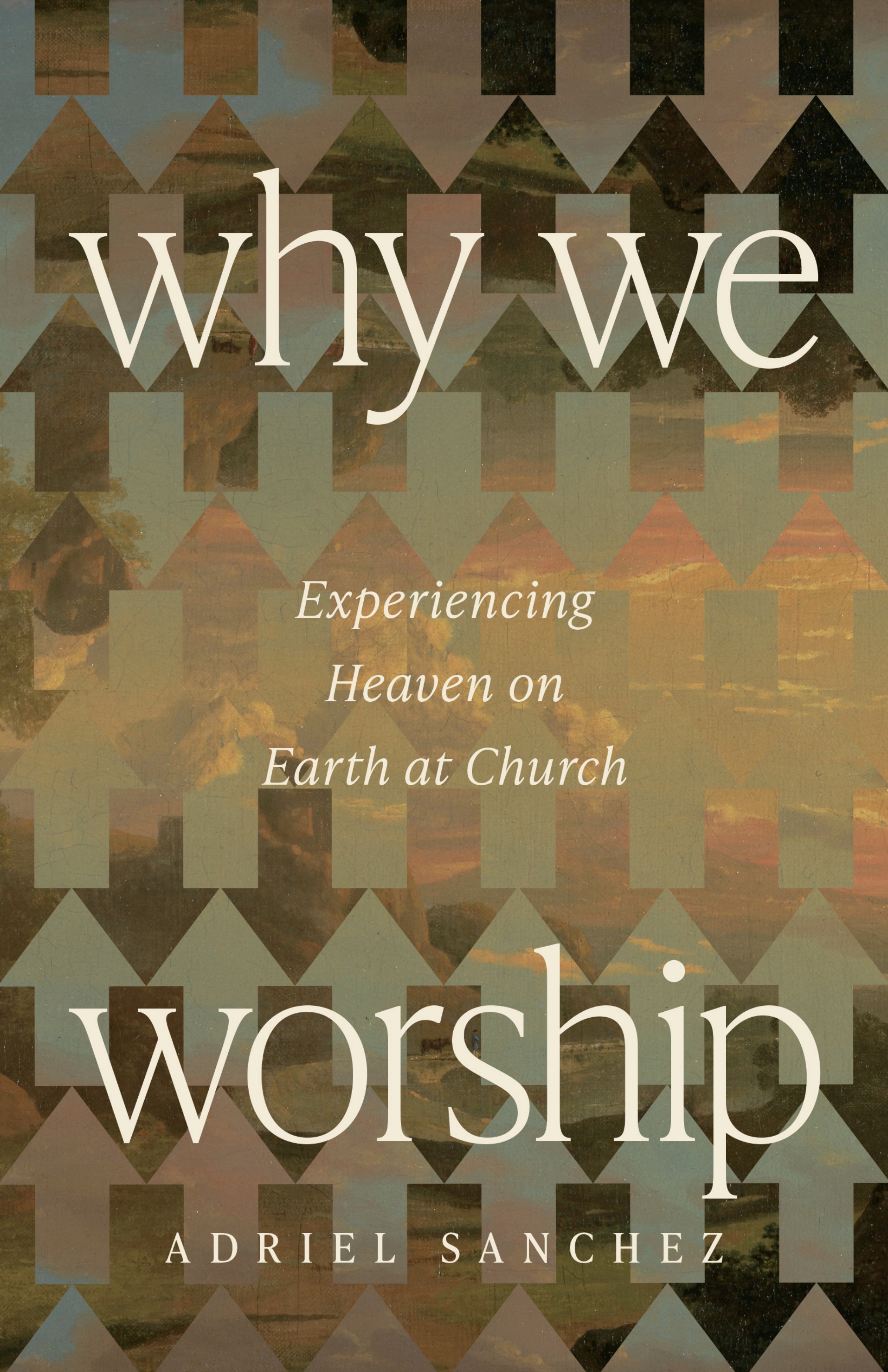
Check out Rev. Adriel Sanchez’s book,
Why We Worship: Experiencing Heaven on Earth at Church.

