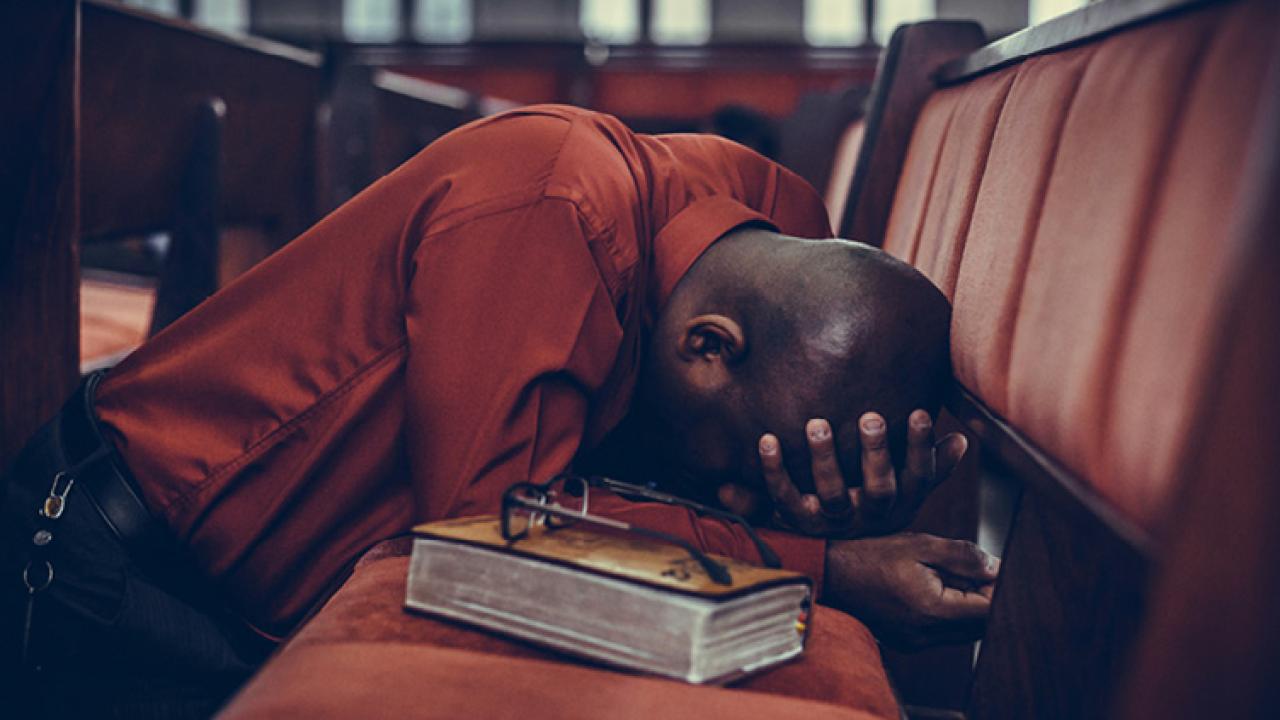
This is part of the worship series,
"Grief Over Injustice, Hope for Wholeness”
Introduction
Lent 1 | Lent 2 | Lent 3 | Lent 4 | Lent 5
Palm/Passion Sunday | Good Friday | Easter Sunday
WEEK THREE: SEXUAL ORIENTATION & GENDER IDENTITY ABUSE
This week was among the most challenging and controversial of the whole series. Our focus was hospitality and how we treat those with different sexual orientations and gender identities. Regardless of where people stand on issues of gender and sexuality, the call to love one another is clear. It is a great injustice when the world reduces people to nothing more than their gender or sexual identity. Instead, we look to our true and primary identity as beloved children of God.
Gathering
Welcome
Call to Worship
“See How Good It Is (Psalm 133)” Kimbrough
God Greets Us
God’s People Greet Each Other
Songs
“O Praise the Name (Anástasis)” Hastings et al.
“God So Loved” Sampson and Crocker
Children are dismissed for Children’s Worship.
Word and Table
Prayer for Illumination
Scripture
Matthew 9:9–13
Message
“Christ Eats with Outcasts”
Song of Response
“Gather Us In” Haugen
Invitation to the Table
Worship brings us together in community, and as we interact and connect with one another, we encounter God. The Lord’s table is a place of fellowship with God among God’s people across all kinds of differences. Christ exemplified that truth in his actions, as in Matthew 9, our text for today, but also in his teachings, especially the parable of the great banquet in Luke 14. In the book A Just Passion, Sandra Maria Van Opstal reflects on that parable:
Luke 14 . . . illustrates a master’s invitation to a great banquet feast. The master’s invitation list reveals no favoritism at the table. All are invited to the banquet: the social elite as well as those from the highways and byways. The tension mounts: when people from different ethnic and socioeconomic standings gather, the result is awkward dinner conversations. And let’s face it, we tend to avoid parties where we expect awkwardness.
But isn’t being at the Lord’s Table in the church like being at an awkward party? Imagine a dinner where random strangers from all walks of life—poor, rich, old, young—are invited. There they are, staring at one another across the table and wondering what they can possibly say and why the other is dressed like that. This is the church! . . . We come together at God’s invitation. The table is an intimate and unique place of communion. . . . It would be easy if we were all clones, but God in his wisdom did not create us that way (Barton et al., A Just Passion: A Six-Week Lenten Journey, 2022, pp. 51–52).
Come to this table:
you who have much faith,
and you who would like to have more;
you who have been to this sacrament often,
and you who have not been for a long time;
you who have tried to follow Jesus,
and you who have failed.
Come. It is Christ who invites us to meet him here.
—Iona Abbey Worship Book, p. 53 © 2001, Wild Goose Publications, www.ionabooks.com. Reproduced with permission of the Licensor through PLSclear.
Celebration of the Lord’s Supper
[Use the liturgy your church is familiar with.]
Communion Songs
“Come As You Are” Glover et al.
“How Deep the Father’s Love” Townend
Prayer
Most gracious God,
we are in awe of your great gifts to us,
experienced here at this table.
You have given your Son that we might live,
you have fed our spirits with bread and wine,
you have made us one body with all your children.
We are renewed today
in our commitment to loving service.
We leave here to build your kingdom in this world,
and we ask that your love will shape our love,
that we may reach to others
as Jesus Christ has reached to us.
Hear us, accept our thanks,
and continue to walk with us.
In the name of him who gave himself for us.
—Reprinted by permission from The Worship Sourcebook, Second Edition © 2013, Faith Alive Christian Resources (TWS 8.5.2.11).
[Continue with the Prayers of the People.]
We Give Our Offerings
Sending
Call to Discipleship
People of God, what do you believe?
We believe that Christ’s work of reconciliation
is made manifest in the church as the community of believers
who have been reconciled with God and with one another.
We believe that unity is, therefore, both a gift and an obligation for the church of Jesus Christ; that through the working of God’s Spirit it is a binding force, yet simultaneously a reality which must be earnestly pursued and sought: one which the people of God must continually be built up to attain.
We believe that this unity must become visible so that the world may believe
that separation, enmity and hatred between people and groups is sin. . . .
Anything which threatens this unity may have no place in the church
and must be resisted. . . .
We believe that God has entrusted the church with the message of reconciliation
in and through Jesus Christ,
that the church is called to be the salt of the earth and the light of the world,
that the church is called blessed because it is a peacemaker,
that the church is witness both by word and by deed
to the new heaven and the new earth in which righteousness dwells. . . .
We believe that the church must therefore stand by people in any form of suffering and need, which implies, among other things, that the church must witness against and strive against any form of injustice, so that justice may roll down like waters, and righteousness like an ever-flowing stream.
—from The Confession of Belhar, 3, Uniting Reformed Church in Southern Africa (URCSA). Translated by the Office of Theology and Worship, Presbyterian Church (USA).
Lord God, we are your church.
Lead us to be the agents of unity and justice.
Let your kingdom come to rule in us and in your world.
God’s Parting Blessing
Song:
“Christ Be All Around Me” Mooring et al.