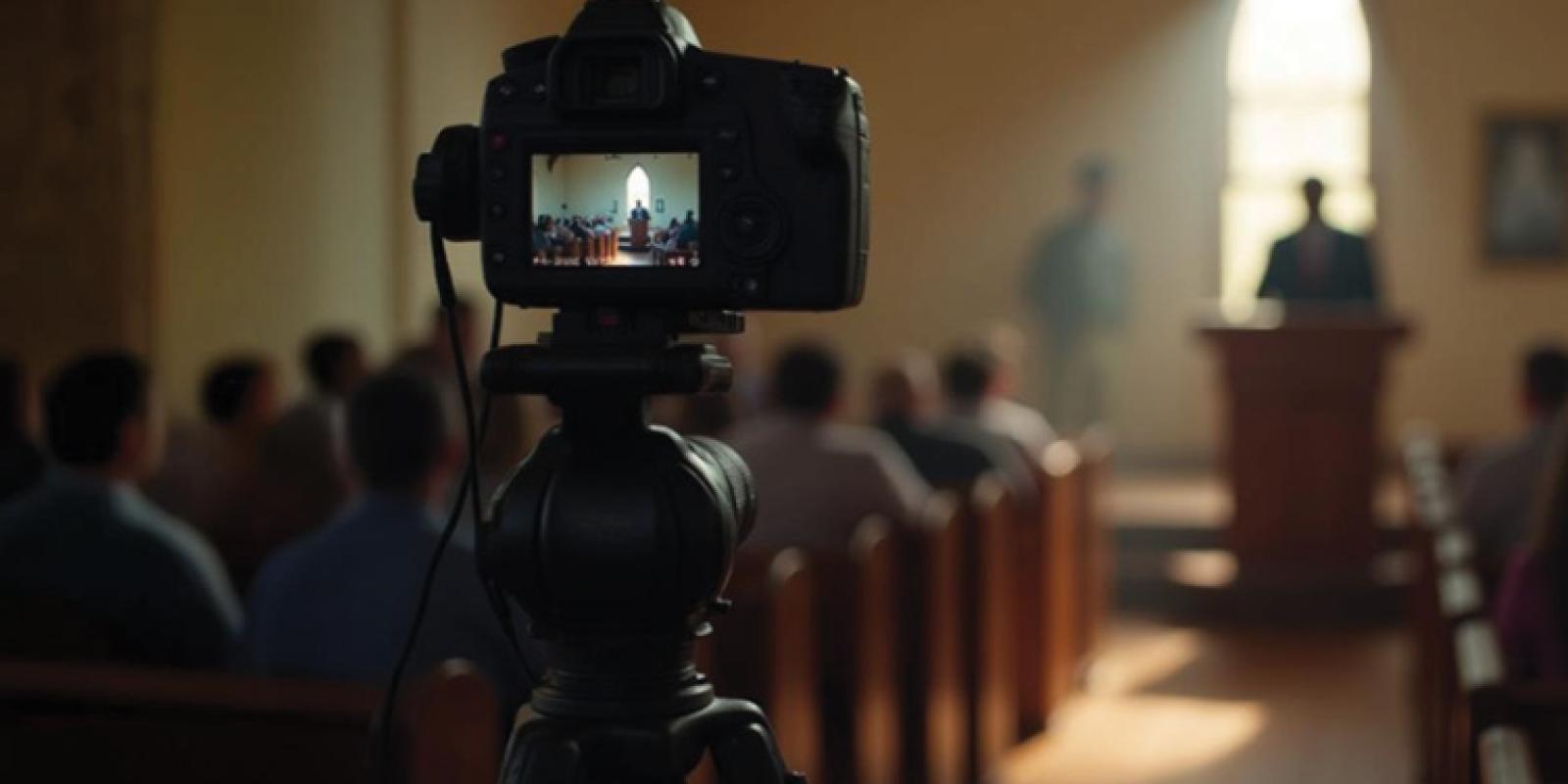
When churches offer both in-person and online (hybrid) services and opportunities to connect, it creates space for people to be a part of the church who otherwise would not be able to. Creative intentionality during and between worship services is key.
TV Church
Pre-covid I remember seeing church services broadcast on national television. There would be a charismatic preacher and sometimes singing from choirs in fancy robes, but it was one directional: a church would broadcast and people at home or in hospitals could watch. The only opportunity for interaction was likely when they made a plea to viewers to call in to give their money to support the program. There was no engagement, no relationship, no acknowledgement of who was even watching. So, in one sense this was “church,” but without the other, it was missing one of the essential purposes of church: to be a mutual body of believers growing in faith together.
My uncle was diagnosed with cancer about 6 months before covid began. His immune system was compromised, so he and my aunt were socially isolating and not leaving home before the rest of the world started doing so. Pre-covid, I think most churches just assumed there was nothing they could do if someone couldn’t make it in the building. The word “homebound” was usually draped in pity and a lack of imagination about what it might look like for a community to knock down the barriers that were in the way of connection. Imagine how helpful it must have been for my aunt and uncle and so many others when suddenly everyone else had to stay home and they could worship with their own church from home! I can’t help but wonder if the relief was paired with hurt, “I’ve needed this for a while, and now—all the sudden because everyone needs it—the church figured out a way to do it!?”
Some churches started with a simple recording of services, but it didn’t take long for most of them to realize that was not enough. People needed more; they needed church to be communal; they needed to feel like they were a part of something; they needed the beauty of diverse perspectives to help them grow in their faith. Zoom coffee times were birthed, council meetings went online, and new volunteer roles for online worship were created.
With COVID in our rearview mirrors, some churches have gone back to only in-person worship leaving people at home behind again. Others broadcast their service online but it’s back to pre-covid days with little thought given to those watching and no interaction with them. But then there are the churches that have leaned into hybrid worship and congregational life. They have committed to accessible worship and an equitable and creative life growing in faith together across technology.
Why Hybrid Worship Matters: Lessons from Three Congregations
Sherman Street Church in Grand Rapids, Michigan has about 25-40 devices (many with more than one person) worshiping online each week.
Pastor Jen Holmes Curran said, “I didn't anticipate us sticking with Zoom worship, because I generally think it is better for people to come in person if they can, but I hadn't really been thinking about those for whom coming on a Sunday was really difficult or impossible. A major oversight, really. We still have a full church building on Sundays, so it seems that the Zoom option isn't keeping people home.”
On-line worshipers often include those with long-term illnesses or disabilities, people on vacation and people recovering from surgery. There’s also parents with napping babies, and, in the summer, families with young children when childcare isn’t available at church. Families and individuals enduring long winter stretches of viruses can still be a part of church. Pastor Jen says that some of the online worshipers at Sherman Street are people who have had church trauma and are triggered by being inside a church building.
Neil and Virginia Lettinga live on Vancouver Island and are members of Telkwa Community Church, a 3 hour flight away from them in Northern British Columbia. The Lettingas were warmly embraced when they served the church as transitional pastors. They went on to serve other churches in other regions but kept their membership at Telkwa, so they could have the support of a home church as they did short term pastoring at other churches. When they retired to Vancouver Island in 2022 they began worshiping with Telkwa online. At the time there were 3 younger people who developed serious illnesses and could not attend in person so there was a need for online worship from others. The Lettingas are three years into worshiping with their church almost exclusively online. They said that they usually show up early to help troubleshoot sound or camera issues and they serve as informal hosts welcoming people in the chat and nurturing connection. People in the church regularly stop by the AV booth to say hi to those on Zoom.
Some of the newest members of LaSalle Street Church in Chicago live outside of Illinois. LaSalle is an independent, inter-denominational church which draws virtual worshipers from across the United States who have struggled to find a church in their region with the same focus on Jesus, justice, and inclusion of all people. Virtual worship can also feel like a more approachable first step for some people looking for a church. “Some new people will livestream one of our services before they come in person to visit,” said Associate Pastor Brent Bailey.
“As is often the case with accessibility interventions, we have found that having robust practices and structures for our online community benefits a much wider population than merely those who typically worship online. For example, it will benefit in-person congregants who may suddenly need to worship remotely for a stretch of time as they recover from illness. Maintaining connection to your church as someone moves (including college students) can also ease a transition to a new place and, perhaps eventually, a new local congregation.”
Intentionality with Online Worshipers
Intentionality with their online community is at the heart of what makes hybrid worship work at LaSalle. “We greet them explicitly in our opening, we encourage people (whether in-person or remote) to exchange text messages during the passing of the peace and remote participants occasionally prerecord certain service elements, like Scripture readings.”
The passing of the peace has become a beloved moment of joy for the Sherman Street Church congregation as online worshipers are invited to turn on their cameras and wave and the Zoom participants can be seen on the large screen up front. The worship leader says things like, “Good to see you Tom and Joan, oh there’s Shonda, glad to have you with us.” Then, the in-person congregation is invited to turn and face the camera which pans the congregation while everyone smiles and waves. For those worshiping from home, recognizing faces of people in the congregation can really help people feel connected.
During communion at Sherman Street, pastors begin by encouraging people at home to “grab something like bread and something like wine or juice.” Then, as in-person people make their way forward, one pastor raises the bread and looks at the camera and says, “Christ’s body, given for you” and the other holds the cup and says, “Christ’s blood, shed for you.”
At Telkwa, “Zoomies” as they are affectionately called, occasionally lead prayer and regularly share prayer requests through chat. The Lettingas have preached sermons and given children’s messages via Zoom. They have taken to praying over people as they come forward for communion. The Lettingas point out that they much prefer Zoom to a live stream because it “feels more like you're sharing your Sunday morning with real people than with church as a TV program” and that they “have interactions before, during and after the service.”
Pastor Brent says that LaSalle has worked hard to ensure that their sound and technology are “as beautiful and accessible as possible.” It’s essential for online worshipers, and for in-person worshipers who are hard of hearing, that people in the sanctuary always use a microphone. Once a month LaSalle hosts a parallel Sunday service online, focused specifically on remote worshipers. They call these services “Sabbath services” and most people, including locals, “worship where they are.”
Between Worship Services
To do hybrid church well, the intentionality needs to extend to the time between worship services. In my work with churches, I’ve heard of people who travel for work and have said no to being an elder for years, and have finally been able to say yes because meetings are hybrid.
The Lettingas share, “Telkwa is in the mountains and Zoom lets people join meetings even when the roads are icy or their children are ill. Hybrid is typical. Access to Zoom seems to have transformed the church's attitude toward meetings; meetings often have those who used to avoid meetings totally now joining via Zoom.” Similarly, Pastor Brent shared that LaSalle is “a commuter church, and the majority of mid-week programming happens on Zoom.”
When Sherman Street recently moved to a parish model, where congregants are grouped by geographical regions, they made sure to include an at-large parish which is made up of “members who either live outside the area or feel their needs would be better met in this group,” according to Kimberley Verhulst, a missionary in the Dominican Republic. Kimberley helps organize activities for the At-Large Parish ”We have had monthly Zoom meetings across many time zones. We've used ice breakers like, ‘What book or movie describes your past week?’, shared a bit about our lives, and prayed together. Our elder and deacon have also given short updates about what is happening at church. Living and working cross-culturally can be challenging at times, so having a group that includes other missionaries and those living away from home has been very encouraging.”
Pastor Brent shared a very helpful suggestion about supporting an online community, “It requires thinking of them as an actual community or people group in your church, much like you might think of ‘young adults’ or ‘families with kids.’ If you want to support an online community, it should be written into a specific pastor’s and volunteer’s role descriptions. ‘How can our online congregants participate?’ should be a question for every planning meeting.”
Questions to Consider
- How did you create a meaningful worship experience for people at home during Covid? How did you engage people in the life of the church during that season?
- In what ways may you accidentally be excluding online worshipers?
- Is it easy for people to visit online? Does your website include information about worshiping online?
- How can you seek feedback from regular online worshipers? Can they hear the music clearly? See the words to the songs? What makes them feel engaged? Left out?
- What does it look like to start with a default of doing church activities in a hybrid way?
Pastor Brent offers these additional questions:
- How do your church’s practices of discipleship include or exclude people who worship online?
- How does your church’s sacramental theology affect the participation of online worshipers? What do you believe about, e.g., communion, and how does this include/exclude people who worship online? Are there creative ways you could include them without compromising your beliefs?
- Can you afford to have a pastor, leader, or key volunteers engage only online for a few weeks or months to experience that sphere of your church’s worship life first-hand?
- To what extent are the voices of people who primarily engage online included in planning and discernment conversations?