Resources by Harry Boonstra

Bread and Cup

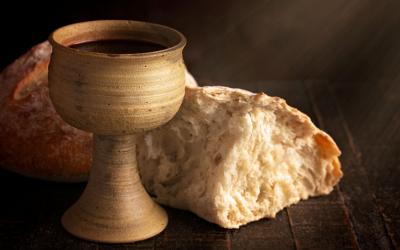
The worship team of our church met recently to discuss the Lord's Supper—not its theology or spiritual significance, but the mode of our participation. Should we sit in pews, the way we have done for the past sixty years? Should we consider gathering around tables, as our church's founders did in 1915? Should we come to the front and take the bread, dip it in the cup, and eat while walking back to the pew, as we have tried a few times (dubbed "dip and run")? Should we stand in a circle as we take the bread and wine?

Read The Article
Person sitting in pew

Generalizations are dangerous, but I'll hazard one. I have visited enough churches in The Netherlands to generalize that usually not a soul or body in those congregations will so much as nod a greeting at a visitor. After the service there may be occasional "hellos" among friends, but few people linger. Five minutes after the benediction both the sanctuary and the bicycle parking lot are empty.

Read The Article
Open Hymnal

Even if you don't know very many Scripture choruses or praise songs, there's a good chance you'll know "Seek Ye First the Kingdom of God." From the time it was written in 1972, the song has been a "hit" and has been incorporated into countless hymnals and albums. To its composer, Karen Lafferty, "Seek Ye First" has been a wonderful miracle which gives her daily joy.

Read The Article
Bread and Cup

Spiritual nourishment for the shut-in We gathered around the kitchen table in the old farmhouse. The oilcloth with pictures of yellow pears and red strawberries was still on the table from lunchtime. So were the napkins and a few stray bread crumbs. There were four of us: the eighty-two-year-old widow who had lived in the house since her marriage sixty years ago, two elders, and myself.

Read The Article

by David Ng and Virginia Thomas. John Knox Press, 1981. 156 pp. This book has become somewhat of a standard text and remains one of the best guides on children and (or rather in) worship. Sensitive to biblical models, Reformed theology, and child development, the authors present a compelling case for children as full participants in worship. Ng and Thomas recognize that such inclusiveness requires deliberate effort on the part of the home and the church. They suggest routes for moving congregations in that direction.

Read The Article