This originally appeared as part of the article "Singing the Sovereignty of Christ Over Creation" where you will find additional reflections and other congregational song suggestions on similar themes.
“All Peoples, Clap Your Hands”
Words and Music: Paschal Jordan, OSB © 2015 Paschal Jordan, OSB
Words and Music are available in the resource section below. For permission to use contact Binary Editions, jda@binaryeditions.com (www.binaryeditions.com).
Background
This liturgical season is also characterized by Ascension Day, which marks Christ’s ascension to heaven on the fortieth day following Easter. This dramatic conclusion to Jesus’ earthly ministry is a story equally important for its focus on how the followers of Jesus take up their own ministry and invite others to the role of Christian leadership.
Psalm 47 is the lectionary psalm for the Feast of Ascension. Its stirring imagery of trumpet blasts and shouts of joy makes this Hebrew Bible song a fitting celebration of a decisive gospel event. It is this sense of high-spirited excitement that prompted the Benedictine brother Paschal Jordan of Trinidad to write “All Peoples, Clap Your Hands.” This psalm paraphrase incorporates a repeated choral “alleluia” and raucous hand percussion. Jordan has noted of his piece that Psalm 47 is one of the processional psalms, which were sung as the people went with the ark of the covenant in procession in the ancient temple liturgy. The psalm acknowledges the universality of the reign of God—“the earth is the Lord’s and all that is in it”—and Jordan’s setting is an attempt to capture the exuberance and joy of the worshipers in praising a powerful and saving God.
Analysis
“All Peoples, Clap Your Hands” consists of a solo or cantor line that carries the psalm text, a repeated choral exclamation of “Alleluia,” and a rhythmic ostinato of leg-slapping and clapping. The rhythmic underpinning is reminiscent of a child’s clapping game or the ubiquitous accompaniment of drum kit, congas, and other percussion that drives a steel drum band. This infuses the song with the strong sense that the whole community is drawn into the act of worship.
The character of Jordan’s paraphrase owes much to a musical-cultural movement in the Caribbean around the time of the Second Vatican Council in which music leaders were inspired to write songs that allowed worshipers to sing the biblical story in their own words and style. In Jordan’s writing, this meant an emphasis on imagery of the sun and the sea, and naming explicitly that the same God who walked with Israel in the desert also walks with West Indians in their journey of faith.
Jordan also notes that body movement is integral to the enjoyment of both this psalm and his setting of it. So invite worshipers to leave the printed page behind and sing this piece from head to toe. In fact, the song is easiest to learn if you don’t use the printed score at all.
Performance
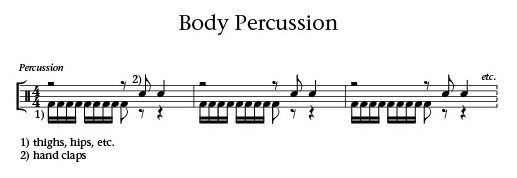
As with the hymns above, this song will be most successful in worship if you take some time to teach it. I have found this piece is learned most easily by breaking it down into its various parts. Consider distributing the solo/cantor stanzas among different soloists from the choir ahead of time, and teach the “alleluia” harmonies by rote to the congregation with support from your choir. The alleluias come in on the off-beat, so as cantor I find it helpful to indicate that with a strong gestural downbeat inviting the congregation to jump in.
When I first introduce this song, I like to separate out the body percussion and singing, so singers are not overwhelmed trying to do everything at once. So people slapping and clapping just do that, and singers just sing “alleluia” (you might have the left side of the room be the percussion section, for example, and the right side sing). For further support, consider designating a leader for the slaps and a leader for the claps, while you or a soloist lead the singing.
Over time, this continual practice of supportive learning in community can help your congregation be more musically conversant and comfortable with a wider range of styles. Most important, you can show that learning together in community can be an act of worship in itself.
You can learn more about how to teach and use “All Peoples, Clap Your Hands” by watching Episode 1 of Hilary Donaldson's web video series “Break into Song” for free on YouTube (breakintosong.ca).
The language of Psalm 47 is fierce and triumphant. It calls on the people of God to praise and fear the King of Heaven who destroys our enemies and rewards the faithful with glory. Its message is fulsome and forceful, even jarring. In light of the Western church’s legacy of colonialism, some church communities who represent the majority culture may be reticent to sing from such a triumphal stance, and rightfully so. At the same time, however, it is important to consider the context in which this song of praise was written. The ancient Hebrews were a tiny and politically powerless community, and they sang this psalm in defiance of their uncertain future. In their own ongoing struggle against the legacy of colonialism, Caribbean Christian communities also identify with the Hebrews in this way. For Christians in the West Indies, the story of Psalm 47 is their story, and they look to a God who walked with the Israelites in the desert and so walks with them along the shores of Trinidad.
We know that singing together helps to forge a strong community. Songs like this one take this idea further in that they embody in themselves the essence of community: the intricate interplay of voices and percussion means you can’t sing this song all by yourself. It’s also one in which worshipers of diverse ages and abilities can readily participate.
This image of a community coming together in song and praise is a powerful one as we move through the biblical story, from the inciting story of Jesus to the unfolding ministry of his disciples of all ages and backgrounds.
In many ways, fostering robust and vital congregational singing is like tending a garden: it requires continual loving care, it takes time and patience for it to grow and blossom, and communities are strengthened and fed by it. May these songs inspire and empower us to be worthy custodians of all the gardens in our care.