This is part of the worship series
"Consider the Birds of the Air"
Series Introduction
Week 1 | Week 2 | Week 3 | Week 4
Introduction
The Bible is a masterful book inspired by God. Themes, colorful characters, subplots, foreshadowings, prophecy, fulfillment, and literary balance shape this living book, an endless treasure. The Bible holds these components together through story, symbol, and metaphor. Some symbols are used only once: a burning bush, a withered fig tree. Other symbols span the Bible: trees, angels, mountains, rivers, rainbows…and birds.
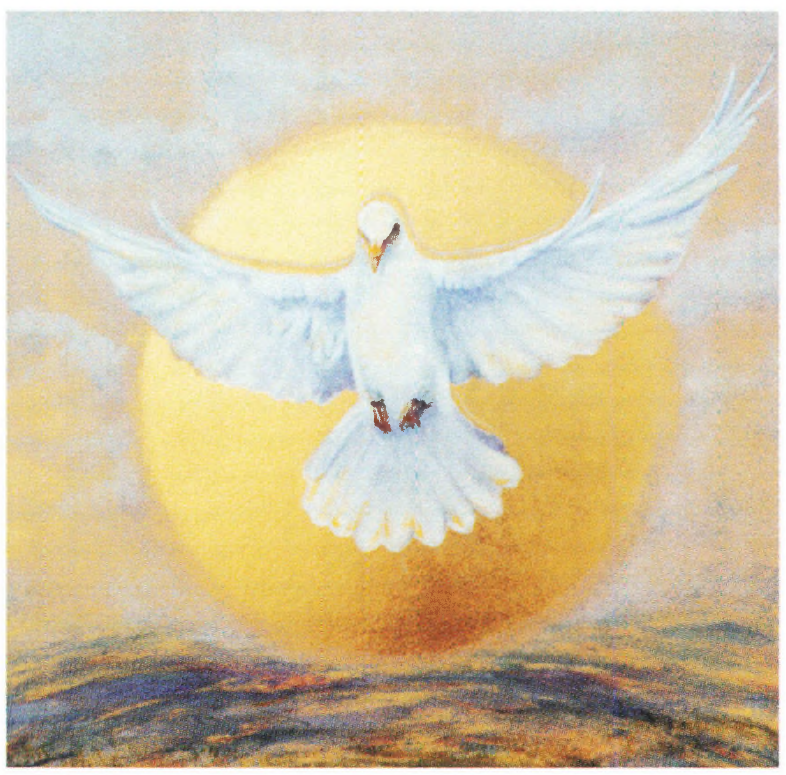
The Bible is a veritable aviary! Genesis begins by describing a time when darkness and nothingness prevailed, but out of nothingness there was God, by whom all things were made. Then, already in the second verse of the Bible, before our eye flashes the idea of a bird. In a single word, the writer says that the Spirit was "hovering over the waters."
When biblical writers wanted to draw on an image that people could understand in both its concrete and allusive qualities, birds flew into the story. Little wonder, for birds were everywhere in the sun-drenched lands of Bible times. Biblical authors saw hawks soaring in the heavens. They observed migration for what it is and left us the oldest written account of it. When an eagle swooped heavenward, they marveled at its mastery of the air. Owls hooting in the night made them shiver and imagine desolate and ruined cities. They watched swallows build their muddy nests under the temple altars. Birds were a part of everyday life.
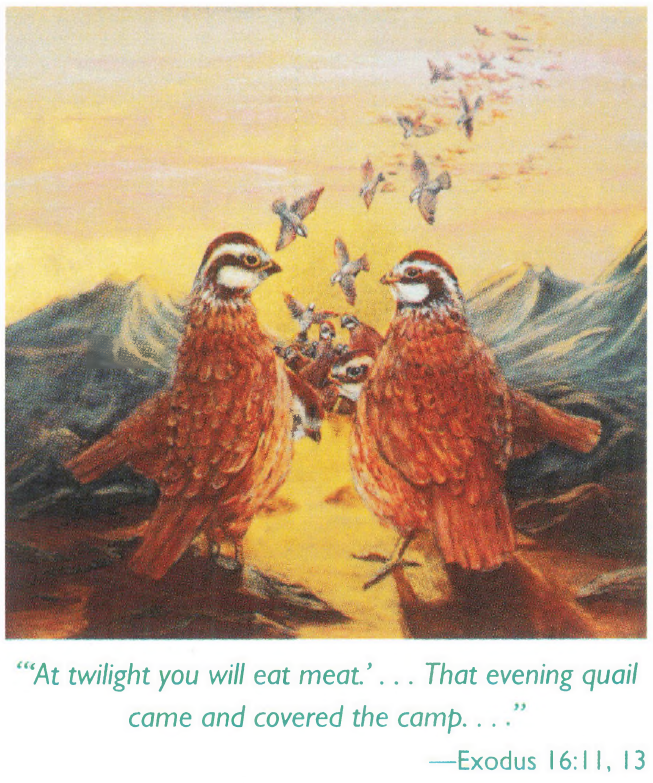
Naturally, then, these authors wove birds into most major Bible stories. They told how a dove with a freshly-plucked olive sprig returned to Noah’s ark (Genesis 8:11). They told of a miraculous migration of quails to the desert (Exodus 16:11, 13), of ravens bringing food to a starving prophet (1 Kings 17:6), and of a rooster whose crowing at dawn caused Peter, the “rock,” to weep (Matthew 26:74–75).
From living with and watching winged creatures, the writers drew spiritual lessons. God is like an eagle under whose wings we can find protective shelter (Psalm 91). God is gentle as a dove, descending over the baptismal river on his son—and on us (Mark 1). Jesus came to his people to love and care for them like a hen gathering her chicks under her wings (Matthew 8:37).
Birds bring the ancient stories close to our own experience—and so they have become symbols of Christian realities and part of our spiritual vocabulary.
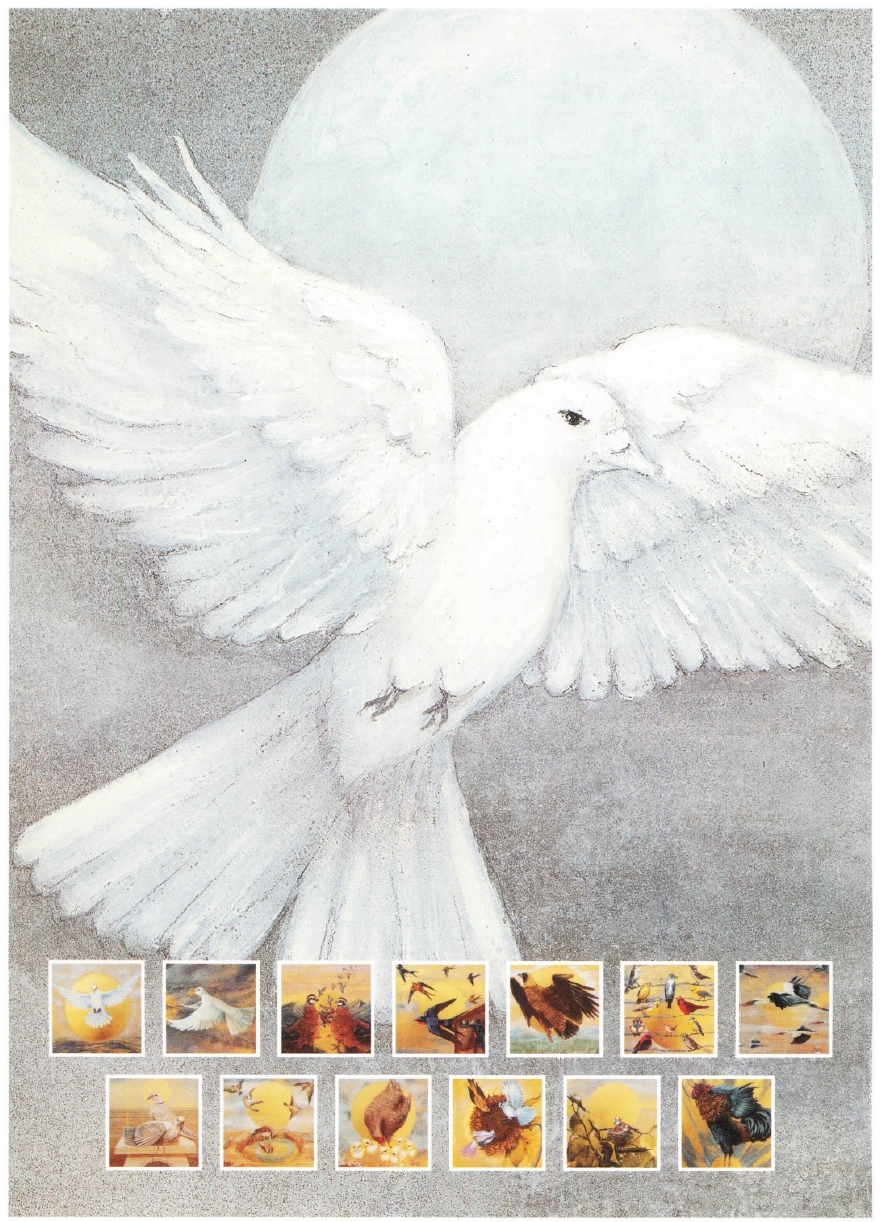
All of these ideas—and more—inspired noted artist Edgar G. Boevé to paint thirteen birds of the Bible. These 13"x13" paintings on gold leaf trace the biblical story from creation through the fall, to God’s provision for redemption. Boevé painstakingly researched the anatomy and coloring of each bird, but more ingenious is the story each painting tells, expounding the rich lessons already in the Bible.
Take, for example, the second in the series, “The Dove Returning to the Ark.” As in all the paintings, the orb of the sun is present, but here it is to the far left, hidden by slowly receding clouds. This dove, in contrast to the “Dove of the Holy Spirit” at creation, is alighting, not descending. It has found freedom; it is the only bird of the series—save the eagle—gleefully headed off the canvas.
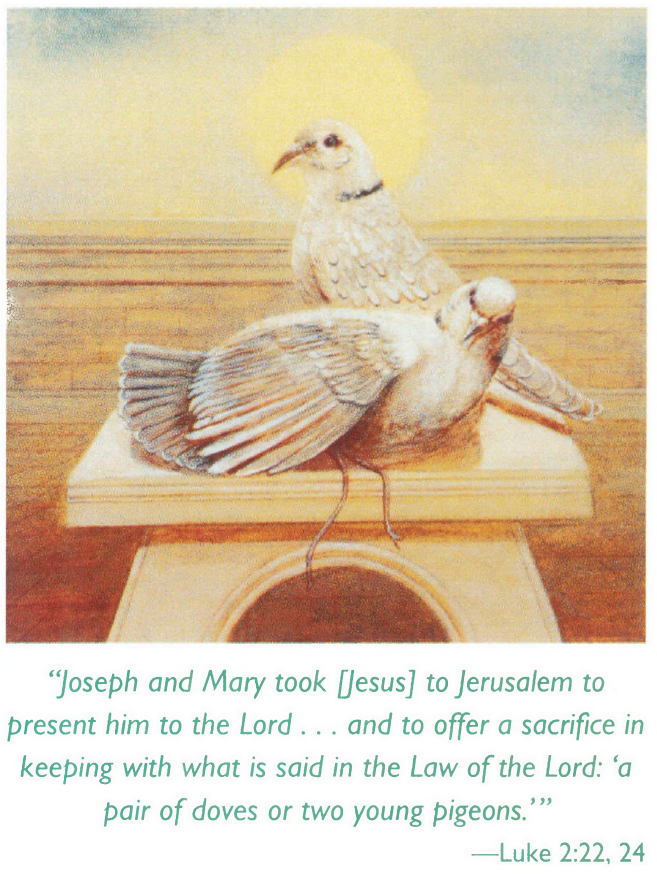
And that’s only the beginning. “The Sparrows Under Divine Care” immediately draws us to the wonderful circular flight of sparrows around the sun; but then we notice the one sparrow drinking from the water and discover that the pool is in the shape of an eye. In “Singing Birds Praising God,” many songbirds perch on five wires, their bulbous bodies turning into musical nomenclature on a staff. We are captivated by the innocence of the doves in “A Pair of Turtle Doves as Temple Sacrifice” and amazed that such contrasting subtleties could exist within the one color used for the dove, altar, and wall.
This magnum opus of Boevé inspired me with sermon idea after sermon idea. As each painting told its story from the Bible, I was moved again in my praise of God. In gathering material about the birds of the Bible, I found new insight into the Scriptures and a renewed friendship with the writers of the Bible. In viewing these paintings and taking a fresh look at Scripture, I know your thoughts will be stimulated and your hope renewed like the eagle’s.
Artist’s Reflections on “God’s Aviary”
In the Bible and in other religious writings, every winged being symbolizes spiritual truths. Folklore all over the world uses the bird as a symbol of the soul. Myths and folktales universally depict birds as collaborator with humans and often as celestial messengers. They are symbols of thought, of imagination, and, as airborne creatures, of swiftness of spiritual processes and relationships. The Bible is particularly rich in its reference to birds that express spiritual truths.
For “God’s Aviary,” I have chosen thirteen birds:
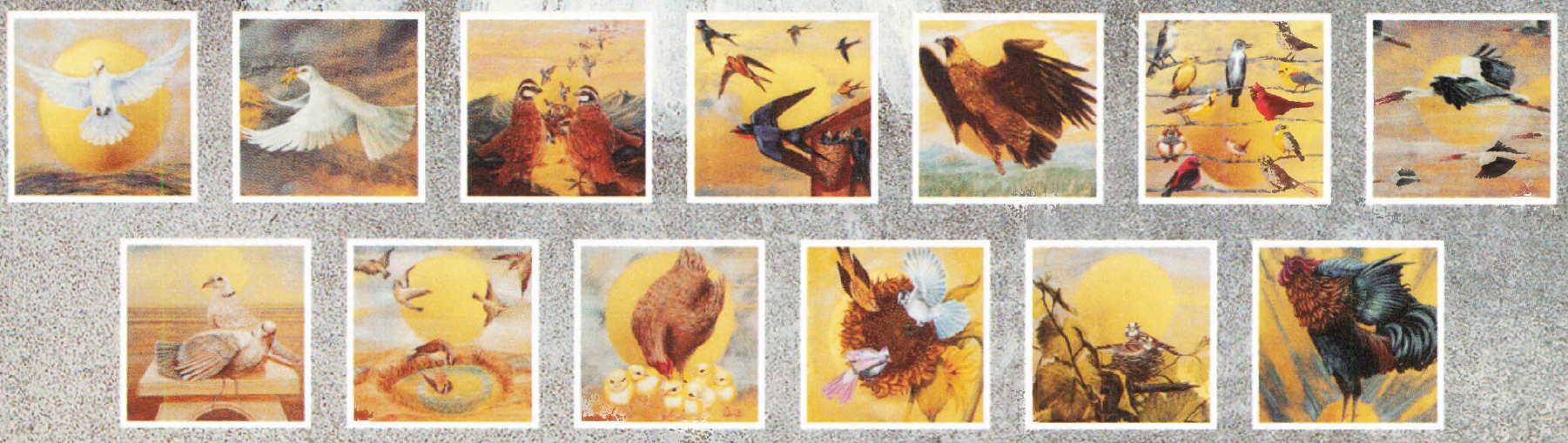
- The dove of the Holy Spirit as it hovers over the universe; Genesis 1:2 and John 1:32.
- The dove as it returns to Noah in the ark after the flood; Genesis 8:8–12.
- The quail God sent each evening to feed the Israelites in the wilderness; Exodus 16:13.
- The swallows that nest “near your altar”; Psalm 84:3.
- The golden eagle rising above the landscape; Isaiah 40:31 and Psalm 103:5.
- Singing birds praising God; Psalm 104:12.
- Migrating white storks as pilgrims, which also have great fidelity to their nesting site; Jeremiah 8:7 and Psalm 104:17.
- A pair of turtledoves as the temple sacrifice brought by Mary and Joseph at their presentation of Jesus; Luke 2:23–24.
- The sparrows under divine care; Matthew 10:29–31.
- A hen with seven chicks, expressing Christ’s love for his children; Matthew 23:37.
- Three feeding birds on a sunflower, expressing God’s constant care; Matthew 6:26.
- Crown sparrows nesting among grapevines, while “the Son of Man has no place to lay his head”; Luke 9:58.
- The cock crowing at dawn (Peter’s denial); Matthew 26:34, 75.
The sun is a significant element in each painting as a symbol of true light (see Psalm 27:1; John 8:12). It is also important as an indication of the time of day.
—Edgar G. Boevé
Series Outline
| Title | Scripture | |
| Week 1 | The Raven and Dove | Genesis 6:1–9:3 |
| Week 2 | His Eye is on the Sparrow | Matthew 6:25–27 |
| Week 3 | The Son of Man Has No Place | Matthew 8:20; Matthew 23:37 |
| Week 4 | On Eagles Wings | Isaiah 40:28–31; Revelation 4–5 |