Resources by Emily R. Brink

group of people around a table

I don't know who first "discovered" Kierkegaard's contribution to the nature of worship, but a lot of people have been referring to it. Here's how it goes: Imagine a worship service as a drama. Who is the audience? Who are the actors? At first glance, most would say that the congregation is the audience, and the minister is the actor. But no—Kierkegaard supposedly claims that God is the audience, the worshipers are the actors, and the minister is the prompter.

Read The Article

BULLETIN NOTE Our guide for worship is Paul's letter to the Colossians. This epistle celebrates the lordship of Jesus Christ, reminds us of our "Freedom to Serve," and calls us to live in the fullness of our union with Christ. The order of worship mirrors the outline of this epistle, with hymns and prayers that serve to help us live into the truth of Paul's message.

Read The Article

How many extra services does your church plan during Holy Week? Traditionally, most Presbyterian and Reformed congregations have held a service on Good Friday. Some have also gathered for a sunrise service on Easter morning. But few have considered anything further.That pattern has begun to change. Worship planners have enthusiastically discovered the riches of a liturgical heritage that goes beyond traditional Holy Week offerings, and have added new services to their Holy Week schedules.

Read The Article
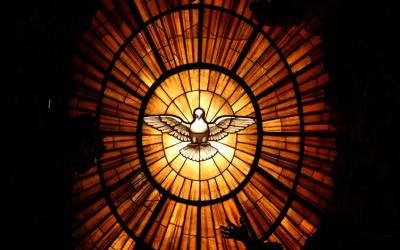
Dove stained glass window

Leader: When the evangelist Luke recorded the outpouring of God's Spirit on the early Christian church, he was led by that same Spirit to incorporate the Old Testament prophecies that Peter included in that first Pentecost sermon. We will now listen to that story and sing together those Old Testament prophecies.(2) Hear now the Word of the Lord.

Read The Article
Wedding rings

I'm at the age now where I'm getting invitations to weddings of the next generation: nieces, nephews, and children of friends. Weddings haven't changed that much from a generation ago. For that matter, weddings have stayed remarkably unchanged for centuries. They, along with funerals, are just about the only ceremonies left in our culture that are broadly celebrated in similar ways.

Read The Article