Resources by Scott E. Hoezee

Years ago, in her book Speaking of Sin, Barbara Brown Taylor had a chapter with the curious title “Sin Is Our Only Hope.” Aside from bearing a catchy title, the chapter demonstrated that, though there is no hope per se to be associated with sin, there is a lot of hope to be found in the ability to confirm there is such a thing as sin. What’s more, the reason that’s hopeful is because it points to the God who, like the ultimate cosmic umpire, is able to call balls and strikes. God is able to see what is right and what is wrong, what is in and what is out, and in so doing to convey hope that if sin can be dealt with in some final way, then we can be delivered from it and arrive at a better cosmic day. Everyone who preaches knows that for any given sermon, being able to point to what is wrong in this world is the relatively easy part. Homelitician Paul Scott Wilson calls it “Trouble.” Eugene Lowry refers to “Oops!” and “Ugh!” Bryan Chappell calls it the “Fallen Condition Focus.” The point is that when we look at the world around us, we spy all kinds of examples of wrong, bad, and hurtful realities. Sometimes these are comparatively smaller matters, like someone uttering a cutting word that wounds you. Other times they are true horrors, like the invasion of Ukraine and the slaughter of innocent life. What people in the Calvinist tradition have long labeled “total depravity” is an empirically verifiable truth that we each encounter every day. We all desire a hope that says it doesn’t have to be this way. In the charming 1995 movie Babe, all the animals on Farmer Hoggett’s farm are given voices, and throughout the movie each kind of animal—sheep, cows, dogs—presents its own particular worldview. Each animal has a perspective on all the other animals, and when we are told how sheep regard dogs, for instance, the narrator assures us that there is nothing in the world that could change a sheep’s mind on such matters. Another narrated refrain was that “the way things are are the way things are,” and that these settled facts were immutable. Despite this film’s many charms, there is something a little depressing about the idea that the way things are in the world are immutable and will never be altered. We have to hope, in fact, that the way things are both can change and ultimately must change because a lot of what characterizes life for now falls into the category of what we would regard as sinful. And if something is sinful, then it means it deviates from a norm that exists. Being able to acknowledge what is sinful is our only hope. In John Milton’s language, if there is such a thing as “Paradise Lost,” then there must be hope of finding a way to arrive at “Paradise Regained.” We have been thinking about intergenerational worship in recent issues of Reformed Worship. Intergenerational worship implies intergenerational preaching, and on matters of sin we preachers need to recognize that generations may differ on definitions of sin and on what counts as sin worthy of mentioning in a sermon. It’s not that younger people have abandoned a sense of sin—at least not in all circles. True, Christian Smith has identified a modern belief he calls “moral therapeutic deism,” in which many people downplay the day-to-day sins that were of great concern to past generations in favor of the idea that living “pretty good” lives might be enough to pass muster. God is not paying that close of attention to our lives, many feel, and probably grades on a curve anyway. So if you are a decent sort of person who avoids really terrible activity, you are probably going to be just fine in the sweet by and by. Most would agree that this perspective guts traditional notions of sin pretty thoroughly. But I don’t think this worldview is held by most younger people in the church today. There seems to be a persistent belief that sin is real and must be dealt with. This often gets expressed in the language of justice. Anything perceived as unjust still gets people’s attention and still gets labeled as sinful and in need of rooting out. Curiously, that puts a lot of younger people in pretty close alignment with the Bible, particularly the Old Testament. Many things in the Old Testament were labeled sinful, but a careful Bible reader would be hard pressed to deny that matters related to injustice are prominent. Things as serious as murder or theft or rape or abuse were treated as sinful not simply because they were sinful actions in themselves, but also because they ultimately contributed to injustice in Israelite society. This focus culminates in the writings of the Minor Prophets, in which Israel’s treatment of the poor and the marginalized and the vulnerable are assailed for all kinds of reasons, but especially because their sinful actions were, first and foremost, unjust. Treating people differently based on socioeconomic status or gender or nationality was sinful, all right, but at their core the sinfulness stemmed from the injustice of it all. In preaching and in church life generally, it is too easy to look at the perspectives of younger people and chalk them up to a lack of seriousness where sin is concerned. Often this comes out whenever a younger person is not as worried about certain things—Sabbath observance or consumption of media or attitudes toward various social activities—as were older generations. Sometimes it may be that something long regarded as a sin still is a sin, whether younger people or others label it as such or not. But although we can and should discuss these matters case by case, we should not overlook younger generations’ focus on upholding justice and combating injustice, a concern that demonstrates they’re still very serious about sin after all. How exactly this awareness translates into preaching is something I cannot fully articulate in this short column. Perhaps I could not fully articulate it in even a much longer piece! But we preachers know that people who listen to our sermons perceive our core perspectives over time. If we consistently embed language or sentiments into our preaching that convey to younger people the message that the church regards their attitudes toward sin as woefully lacking, this will tend to marginalize people who believe in their hearts that they are very serious about wanting to make the world a better place by addressing what they regard as sinful and unjust patterns in society and in the church. Sin may well be our only hope, but such hope can be sought in a variety of ways. Those of us who preach would do well to learn from how younger people in the church today look for hope: by seeking to address what is unjust in the world.

Read The Article

In my previous column in Reformed Worship (RW 144:43), I discussed how reading books aimed at children and middle schoolers provides preachers with an array of benefits that can improve their sermons. It goes without saying that books aimed at younger people almost universally tell stories. Picking up from there, in this column I want to talk about the role narrative should play in our sermons generally. Since this is the Advent/Christmas issue, I hope we can all make the obvious connection to the story of Jesus’s birth, too. Many preachers know that the biggest revolution in homiletics in the last century was the move from deductive preaching (think three-point sermons) to inductive preaching. Whereas deductive preaching is long on heady content and teaching, inductive preaching centers more on narrative, on stories, on appeals to shared experiences in everyday human life. It could be debated whether this turn to inductive preaching is something new (it is referred to as the “New Homiletic”) or a recovery of homiletical practices that had been lost for a time. But since we are told in the gospels that Jesus rarely taught anything without using a parable, it may be that preaching that incorporates narrative is a return to a practice established by our Lord himself. But recognizing the importance of narrative is vital for other reasons. After all, we seem to be born narrative creatures. Many researchers have confirmed in recent decades that we learn best through stories. This explains why the earliest lessons we learn in life come to us not because our parents lectured us on certain topics, but because they read stories to us that displayed various virtues. As children, we learned generosity not because our parents tacked up lists of the key marks of generosity on our nursery walls, but because they read us stories that showed generosity in action. The novelist David Foster Wallace once noted that we humans seem to need narrative the same way we need space and time—as though it is a built-in thing. As narrative theologians in the late twentieth century noted, you cannot even tell someone about how we are saved through Jesus without telling the story of Jesus as narrated for us in the gospels. “Tell me the story of Jesus,” one old hymn says. Even in heaven, another hymn claims, what we will savor the most will be “the old, old story that I have loved so long.” What’s more, the fact that narrative is built right into us can be detected if you listen in on conversations at places like Panera or Starbucks. If we want to convey to a friend what is happening in the lives of our children, we don’t reel off a list of facts; rather, we tell stories. When couples are dating and getting to know each other, they do not exchange fact sheets listing relevant information on their families or where they lived and went to school. No, they spend hours sharing their stories—funny stories, sad stories, stories that tie in with significant turning points in their past. And when we tell such stories at Starbucks or on a date, we include lots of important details, we give a sense for the drama of certain events, we speak in the first-person voice of the people involved in our stories—in short, we narrate our lives. Preachers do this too in all kinds of settings, and yet too many of us seem to toggle this narrative switch to the “off” position the moment we enter the pulpit. Even when we have a cracking good story from our Bible text, we tend to atomize it, boiling it down to some single nugget of truth that then, instead of the story, is what we talk about in the sermon. We ignore all the first-person speech in Bible stories. We drain these narratives of their drama and color and end up with a kind of “just the facts, ma’am” sort of sermon. We act as though the story itself is not important. The Bible itself ought to prevent us from doing this. As the preacher Thomas G. Long has often noted, if you ask the average person what the Bible is, you are apt to hear an answer along the lines of, “Well, the Bible is a kind of compendium or encyclopedia of doctrines and concepts about God that now and then throws in some stories by way of illustration.” That has it backwards, according to Long. The Bible is really one giant story from beginning to end. Further, the Bible is chock full of smaller stories. Doctrines and concepts about God emerge from those stories. Since the Bible is God’s book, one has to conclude that according to God’s way of looking at things, the whole universe and how it unfolds is one giant Story. God reveals himself narratively. The ancient philosopher Aristotle taught that every good story needs an emotionally engaging originating event. Every story needs to be premised on something interesting, something that is “up in the air.” The story then moves from that originating event through some escalation of that event and then finally on to some kind of resolution. To put it another way, it’s not a story until something goes wrong. Sermons need this too. Different homileticians have different names for this. Paul Scott Wilson calls it “trouble.” Eugene Lowry calls it the sermon’s “ooops!” and “ugh!” moments. Bryan Chapell looks for “the fallen condition focus” of the Bible text. Once we encounter a crisis that needs resolving, a tension that needs relaxing, a mystery that needs solving, or a question that needs answering, we are off and running with a good story. This is also why few if any church school Christmas programs are based on John 1 or the last few verses of Matthew 1. Neither Matthew nor John begins with a story (Matthew’s subsequent tale of the Magi notwithstanding). Luke, on the other hand, bombards us with stories in his first two chapters, so, not surprisingly, church-school programs and some made-for-TV Christmas movies spin out of Luke’s gospel. We like it when something comes to us as a narrative. People respond best not to a sermon that is indistinguishable from an academic lecture, but to a sermon that unfolds like a story, with a beginning, a middle, and an end, with a plot that motors the sermon along. And when we have biblical texts that are themselves good stories, we need to retell these narratives inside our sermons, highlighting and maybe even augmenting the dialogue and the drama and the characters in ways that pull people deeper into the text. When there is a good story in the offing, people everywhere lean in. As every child knows, it’s a good story when you want to ask, “And then what happens? Tell me more!” Come to think of it, we preachers would love it if that eager posture were true of every person listening to our sermons each week, too: “Tell me more!”

Read The Article

If a pastor spends an afternoon reading a middle-grade fiction book by Kate DiCamillo or Gary Schmidt or Kwame Alexander, does that count as work time for the church? Or is that an avocational pursuit that cannot be included in the pastor’s wider ministry? If you queried members of an average congregation on such questions, you would get mixed responses, but quite possibly there would be a number of churchgoers who would wish their pastor did not “waste” time reading books written for kids. Anyone who knows me or is familiar with the seminar “Imaginative Reading for Creative Preaching” that I have co-led alongside Neal Plantinga for nearly twenty years knows how I would answer these questions. Yes, reading children’s literature and middle-grade fiction should count as ministry time, and if a pastor is not reading such works, it’s time to start! Sermons can be enriched when preachers engage regularly with well-written books for the young. But what specifically might one gain by such reading? First, a reminder from C. S. Lewis, who might have been riffing on G. K. Chesterton: a children’s book that is interesting only to children is not a good book. Well-crafted stories for the young will be as interesting and intriguing to an adult as they are to a child. Many of us have experienced this truth through Lewis’s own Narnia novels and other books we have read to or with our children and enjoyed at least as much as they did. When the art of storytelling is done well, the precise audience for which a book was intended becomes irrelevant. I can attest that on more than one occasion after finishing a middle-grade novel—or in the course of reading one—I have been reduced to tears. The final lines of Katherine Paterson’s classic Bridge to Terabithia at once broke my heart and made it soar. When I first started Kwame Alexander’s The Crossover—written entirely in verse—I was not sure about it. But then I sat stock-still in a hotel room chair reading for two and a half hours, and when I finished the book, I wept. (That, by the way, is a nice advantage of reading middle-grade fiction: an adult can finish an entire novel in an afternoon.) If a preacher ever hopes to move another human’s heart, Neal Plantinga likes to say, then his or her own heart has to be capable of being moved first. And preachers need to recognize what it is about a story that sets their hearts racing. Stories written for the young can do that. Another advantage of reading such books ties in with the preacher’s foremost tool: language. Good middle-grade fiction features sentences that are not too long, word choices that are not too fancy, and descriptions that paint pictures in one’s mind. That is not to say the texts are simple. Rather, they possess a noble simplicity. They present example after example of how much can be accomplished when ordinary and everyday words are wielded well. Because in sermons we ought to shoot for what C. S. Lewis called “the elevated vernacular,” apprenticing oneself to masters of writing for the young makes good sense. And as Neal Plantinga always says in the “Imaginative Reading” seminar, if a preacher can craft sermons that speak to a twelve-year-old’s heart, you can be assured those same sermons will also touch the hearts of that child’s parents and grandparents and everyone else who listens. For pastors, a bonus of reading middle-grade fiction is a heightened awareness that the children and young people in the congregation are not empty containers waiting to be filled up with knowledge. Children have rich interior lives. They have fears. They have secrets. They can figure things out on their own. They don’t need to be talked down to (or preached down to); instead, they should be treated as the thoughtful individuals they are. When accomplished authors are asked how they write so well about children and adolescents, most give some version of: “I remember what it was like to be a child myself.” That is something every pastor ought to strive for. This is also why surprisingly terrible and sad things can happen in good novels for the young. Characters get hurt and sometimes die. Anyone who thinks that such books should avoid sorrow and death fail to realize that children and adolescents have to figure out how to deal with such realities, whether they encounter them in the books they read or not. Even so, authors of middle-grade fiction sometimes get pushback from parents or teachers about the sad or tragic elements of their stories. Such pushback was addressed by acclaimed author Katherine Paterson on December 25, 1988, when she published a lyric essay in The New York Times Book Review titled “Hope Is More Than Happiness.” In the essay, Paterson admits that her books—like many other middle-grade fiction books—do not often feature conventional, “happily ever after” endings. But that is because the real world in which children grow up does not regularly lead to such fairy-tale conclusions either. If we want our children to grow up with hope, Paterson writes, then we need to know that true hope “cannot simply be wishful thinking, nor can it be only the desire to grow up and take control over our own lives. Hope is a yearning, rooted in reality, that pulls us toward the radical biblical vision of a world where truth and justice and peace do prevail, a time in which the knowledge of God will cover the earth as the waters cover the sea, a scene which finds humanity living in harmony with nature, all nations beating their swords into plowshares and walking together by the light of God’s glory. Now there’s a happy ending for you. The only purely happy ending I know of.” Hope nestled amidst the weeds and thorns of a fallen world: that is biblical hope. And it is precisely the kind of hope we preachers should desire to foster in people of all ages. Perhaps seeing how such hope kindles in the young can remind us how it must be kindled and nurtured in all our hearts. A vivid example of an adolescent novel that contains an unexpected tragedy is the aforementioned classic Bridge to Terabithia. At the conclusion of Paterson’s 1988 article, she quotes a letter she received from a parent whose child had read the book: “I really respected this book. . . . You stuck to reality, and you also stuck to a dream.” Paterson then uses this quote to sum up her literary vision: “That is what hope is in my books. And, come to think of it, isn’t it, as well, what we’re celebrating when we sing of the babe ‘all meanly wrapped in swathing bands, and in a manger laid’? Aren’t we saying that in this lowly birth the One who is and will be, the author of our creation, stuck to reality and also to a dream?” Sounds like the gospel to me.

Read The Article

Years ago in a sermon preached around the time of Ascension Day and Pentecost, I juxtaposed two biblical texts. On the one hand was Acts 1. As the disciples stared up into the clouds where Jesus had just disappeared, suddenly some angels appeared—but not up in the clouds. The angels were on earth, standing behind the gobsmacked disciples. Tapping them on the shoulders, the angels basically said, “Why are you looking up there? You’ve got work to do here. Go and wait for the Spirit to come.” On the other hand was a text from Colossians 3 in which Paul instructs Christians to set their minds above, where Christ is seated at God’s right hand, and do not have as your focus the things of earth. “So which is it?” I asked in my sermon. “Focus on heavenly matters or on earthly ones? Stare up into the skies where Christ is seated somewhere in the heavenly realm, or put your nose to the grindstone of ministry work here below?” The answer, of course, is that it’s both. No, we are not called to be constantly searching the horizon, scanning for any signs that Christ is about to come back from the place to which he long ago ascended. Being starry-eyed and distracted disciples who do no more than calculate times and dates for Christ’s return is definitely not what Jesus told the disciples to do after he was gone. Then again, if our minds are not locked on Christ and the things that are above—and what those “above things” mean—then we have no idea how to behave, minister, serve, or preach on this earthly plane. The Christian life is a balancing act, a tightrope walk. Since we have been thinking about the spiritual disciplines in recent issues of Reformed Worship, we can say that maintaining our balance between heaven and earth requires its own kind of discipline. We need to learn how to pray with “eyes wide shut.” When we pray, we must petition God to continue to fill us with divine wisdom and insight. But we never ask for those gifts from above in the abstract. We do not close our eyes when praying in order to shut out or ignore the wider world and its myriad needs. Instead we ask for divine gifts from Christ’s throne above precisely to enable us to meet the challenges that are right in front of us here below. This is what makes Christian prayer so different from at least some forms of Eastern religious meditative practices. As I understand it, transcendental meditation is just what it sounds like: you seek to transcend the earthly reality around you so as to slip—even if just temporarily—into a different and very disconnected realm of the spirit. It reminds me of a John Lennon song from his Beatles years: “Across the Universe.” The song features as a kind of refrain an Eastern meditative chant: “Jai guru deva, om.” But its other repeated refrain is “Nothing’s going to change my world.” By meditating our way out of this broken world, we enter a changeless realm of the spirit that lets us escape to better realities. Perhaps experts in Eastern mysticism will say I am not getting this exactly right, but the gist of it is accurate and does juxtapose with, say, the Lord’s Prayer, which begins with an appeal to our Father “in heaven” and references “on earth as it is in heaven” and “our daily bread” and the need to forgive those who have hurt us. We pray to God in heaven, but the goal is all about the things of earth. To riff on C. S. Lewis, if you focus only on earth, you will never attain heaven. But if you focus on heaven, you get the earth thrown into the mix too and so you end up well connected to both. Preaching most assuredly contributes to helping people keep this dual focus, a version of the old adage attributed to Karl Barth about preaching with the Bible in one hand and the daily newspaper in the other. Sermons that are perfectly biblical but disconnected from what is going on in the world and in people’s lives are “timeless” in the worst sense of the word. Then again, sermons that come off as no more than disquisitions on current events and treat the Bible as an older but only somewhat reliable background resource fail on a much deeper level. The well-exegeted biblical text in a sermon must lead to a contemporary “So what?” that gets answered with real-world traction. In “The Four Pages” sermon template we teach at Calvin Theological Seminary, the fourth “page” or movement of the sermon is “Grace in the World.” It’s the toughest part of preaching. This is where we draw attention to where and how we can see God in action in the world and in the church right now, today. Under the writing and preaching rubric of “show, don’t tell,” Page Four is the “show” part. I can tell you that God is still fighting battles for his people today, but if I cannot show you a single example of what that might look like on a Wednesday afternoon, then the sermon stays somewhat abstract. But that is the difficult part in preaching, so it is no wonder that we hear so many sermons that stop just short of a solid Page Four. But it’s not as though Page Four vignettes of God on the move in our daily lives need to be all up in the spiritual stratosphere of amazing or miraculous stories. In fact, we tell our students that the more mundane and ordinary their Page Four stories are, the better. I may never have the experience of seeing someone walk on water, but I very well may see an instance of God’s amazing grace when I see a moving act of kindness from one person to another in the produce aisle of my local supermarket. That is a Grace in the World I can both relate to and keep an eye out to see (and to celebrate) on any given day. Sermons that only do the equivalent of making people stare up into the sky or that do the equivalent of just commenting on the news of the day are not going to model the balance we are called to have. But even more important than what any one sermon might accomplish in terms of theme and content is the overall posture of a preacher and the habits of mind that preaching builds up in people week after week. Yes, we want any given sermon to be as fine, fresh, and vibrant as we can pull off in a given week, but what builds up in people’s hearts like a holy residue over time are the motifs and the modeling of good spiritual practices emerging from the pulpit over and over. That is what really sinks in for people across a preaching ministry. It is what helps people set their minds on things above so they can be a fruitful presence for the gospel here below.

Read The Article

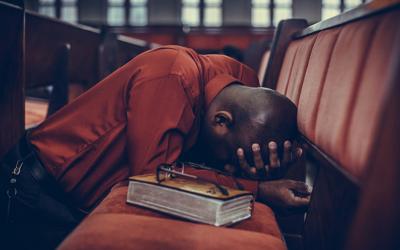
Traditionally most churches had a dedicated slot in the weekly liturgy for confession of sin. Maybe it was called “Confession & Assurance.” In many places over the last few decades this part of the service has been dropped completely. I have not attempted to keep track in any scientific way, but I can testify that if I preach in thirty different congregations in a given year, probably half of them no longer mention sin or the confession of sin in the course of a worship service. Recognizing the need for ongoing repentance has long been a spiritual discipline for Christians not only in their private prayers, but also corporately when we gather for worship. The corporate practice reinforces the private devotional practice. Although confession has typically had its own section in the Sunday order of worship, preaching has long been an avenue to encourage confession. This is so not just in the fiery, John-the-Baptist-like calls to “Repent and live!” but also in sermons that ponder current cultural and ecclesiastical trends that may be leading us into sinful patterns of living. This happens in preaching not primarily—one hopes—in some finger-wagging, scolding manner but rather as a means of grace. Acknowledging and getting specific about our sins and our temptations to sin are ways to lean into God’s grace in Jesus all over again. Bad news about sin has always been a path to proclaiming the Good News that is the gospel. But precisely here is where a lot of preachers today find themselves in something of a homiletical pickle. In our highly charged and politicized society, there are few sins a preacher can mention in a sermon that will not set off all the wrong klaxons in many people’s minds. People begin to think, “The pastor is only saying this because of . . .” and then some political issue or figure will get named. The sin of vainglory or pride? Well, we know who the pastor means and it makes us angry. The sin of neglecting the poor or the stranger within our gates? Pure politics on immigration issues. The sin of avarice or greed? Clearly the pastor is taking a shot at the world of business if not capitalism in general. The need to repent of sexual sins? Obviously an attempt to shut the church doors to gay or transgender people. As usual, when I write these columns I want to acknowledge that there are lots of ways pastors can overtly mess up on topics like this in the pulpit. There truly are things a pastor can say that are inflammatory almost by design, and they do not require a suspicious mind to recognize that a very specific political viewpoint is getting baptized as the only way Christians should think. This happens, and when it does, it is the pastor who needs to repent. But my primary point in this column is that perfectly innocent and legitimate sermonic utterances are being treated as though they were something calculated to offend. Maybe in the ebb and flow of church history this has happened now and again. But I believe it has gotten much worse since the mid-1990s, at least in the United States. After the scandals surrounding Bill Clinton, after the fraught 2000 election, after 9/11 and the war with Iraq, and after the first Black man was elected President, the acoustics in the church changed. As a pastor over some of that period of time, I noticed that things I said in prayers or in sermons that in the 1990s sounded like a whisper to many sounded like a shrill scream a decade later. And please note: I prayed and preached some of the same things in the same language in 2004 as I did in 1997. But whereas in 1997 no one commented on or fretted what I said, by 2004 people would come up to me and complain about that “political” prayer or sermon. Short of giving up pondering sin and our need to repent for specific sins, what are preachers to do? Confession is indeed a traditional and powerful spiritual discipline. But do we let our partisan culture just sap confession of its power in the church? If I had definitive answers to questions like these, I would be quite blessed. But I don’t. All I can do is offer a couple of suggestions that I hope will prove useful and successful for my fellow preachers. First, in our current climate it’s worth remembering the general rule of thumb we teach our seminary students: talking about sin and urging repentance should always be couched in the language of “We” and “Us,” not in the language of “You, You, You.” Preachers should be careful not to divulge too much about their own struggles, but there are prudent ways to indicate that when it comes to struggling with this or that temptation or needing to repent of this or that sin, the preacher is speaking from experience and not just observation of others. Second, examples from history can be invoked to show the perennial nature of most sins and to demonstrate that the preacher is not talking about Sin “X” because of something she saw on CNN or Fox News last Friday. If people think you are talking about lying only because you have issues with Donald Trump or Joe Biden, most of the congregation will harden in some partisan position. But if the pastor mentions how much trouble Lyndon B. Johnson had with the truth or refers to a popular sitcom or movie character who often prevaricates, then the pastor might be able to slip past certain defenses. If one talks about what Augustine said about the poor instead of quoting some op-ed in the New York Times or the Wall Street Journal, then people might lean in more. Finally, another piece of typical homiletical advice might also apply here: Make it clear you are talking about any given sin because what you really want to do is present the joy, delight, and flourishing that can come when we not only repent but ask the Holy Spirit to wash over us in a renewal of our lives. If we present grace-filled living (which includes regular repentance and spiritual maintenance) as a beautiful and exciting prospect, then people will want to get in on that action. The preacher talks about sin not to point fingers at others—in politics or anywhere else—but to point to Jesus, to point to the kingdom, to point to the joy and the freedom of life in Christ. Will any of this manage to surmount the high partisan walls that have been built—walls increasingly running down the center aisle of many churches? Probably not. But in places where the walls are not too high, where hearts are still soft enough to receive both a word of challenge and the good news of grace, the Holy Spirit can work powerfully through our preaching for the renewal of people’s lives of discipleship. This column is provided in cooperation with the Center for Excellence in Preaching. For more on the CEP, its upcoming events, and its online resources, visit cepreaching.org.

Read The Article

This year as we celebrate the incarnation of Christ, it is natural to also reflect on the importance of physical presence in light of the COVID pandemic that has kept us physically apart. If ever we needed a reminder of how important the human touch is, a year and more of no handshakes, hugs, or high fives provided just that reminder. None of us will ever forget the pained longing we saw on people’s faces who could only press palms to window panes as a dim substitute for visiting grandparents in person in the retirement home. For preachers, however, the physical absence of the congregation—of the whole congregation for much of the first year of the pandemic and most of the congregation once things started to open up—presented other challenges. Pastors did not just miss shaking hands at the church door after the service. They missed the living presence of people, of faces turned upward to hear the sermon, of eyes and eyebrows that send signals in a thousand little ways that the sermon is working, is being understood, is moving people. Most of my tradition is a far cry from the traditional call-and-response worship and preaching in African American churches. Shouted lines and words of “Amen!” or “Hallelujah!” or “Preach it!” or “There it is!” just don’t happen during the sermon in most Reformed congregational settings. But when preachers even in my tradition began to preach into a dead camera lens or when they preached from their usual pulpit but to a room of completely empty pews or chairs, they realized that, far more than we are usually conscious of, the congregation even in more quiet and staid traditions sends signals to the preacher all the time. Most preachers I talked to at the height of the pandemic said the vacant sanctuaries not only gave them a sense of loneliness or isolation, but left them feeling empty. A vital part of the preaching experience had simply been evacuated. There may be a thousand lessons in that on the nature of preaching. Theologically, however, this need for in-person contact during a sermon makes perfect sense. Christianity is, after all, the religion of the incarnation. The bodily reality of the Son of God was so vital that the early church wrestled with the ins and outs of this doctrine for a couple of centuries. One person with one nature, two persons with two natures, one person with a blended nature—all options were on the table until the church finally declared the longstanding orthodox doctrine that the Son of God who was born Jesus of Nazareth was one person with two distinct natures. What’s more, the divine nature did not soup up the human nature, and the human nature did not water down the divine nature. Both humanity and divinity were up and running simultaneously in the one man who became known as Jesus after his mother, Mary, gave birth to him. The incarnation was so vital that the church simply had to get it right. All of this is now summed up in the Athanasian Creed, which some historians think might have been memorized by preachers (in times when they had nothing available to them in print) who would then use the creed’s summaries of the Trinity and the incarnation as a set of guardrails to keep their preaching on the orthodox road. Before you gave a sermon, you passed it through the Athanasian Creed to make sure everything lined up just right. The Son of God could never have accomplished salvation by remote control or from some great distance. He had to come here in person, and once he did—as Luke’s gospel shows so brilliantly—he literally touched so many people. “He stretched forth his hand,” we read again and again. He took the children into his arms. Jesus was an eminently physical Messiah. What’s more, the human nature and body he assumed from his mother, Mary, was so vital that he stayed in a physical form after the resurrection. The church has long taught—though people often forget—that Jesus will have a human body for all eternity. The incarnation was not temporary. It makes sense, then, that the preaching used by the Holy Spirit to connect us to Christ, to one another, and to the kingdom of God needs to be an in-person, physical event. Take that away from us (as COVID did), and proper feelings of incompleteness abound. This is why I wonder about the phenomenon of multisite megachurches where the pastor’s presence for the majority of church members is ever and only as projected onto a screen. I have even heard talk of fiddling with 3D holograms of pastors to make it appear as if they are actually on the stage—except they aren’t, of course. There are lots of people who go to church each week who have never looked their pastor in the eye, never shook his or her hand. I realize that many pastors in these situations are doing the best they can, and some take care to appear at a different site each week so the whole church can see the pastor in person on a regular, if not weekly, basis. I don’t mean to suggest that meaningful preaching and ministry does not happen in these settings. I simply wonder about that lack of the physical presence of the pastor and the people. In the end there can be no substitute for the living presence of the preacher and the living presence of the people. In the end there can be no substitute for the living presence of the preacher and the living presence of the people. We can thank God that Jesus did not give us only his virtual presence. Jesus as a hologram from heaven would not have cut it. Of course, the writing and production of sermons is a curious enterprise. Mostly it happens with just the preacher and the Word with no one else in sight. True, some preachers involve members of a weekly Bible study to do a pre-sermon discussion of the text, but at the end of the day, most of the work involved in sermon making is done in the quietness of a pastor’s study. (I wish pastors still talked more about having a study than an office, but that is a subject for another day.) An image from the Beatles and their song “Eleanor Rigby” comes to mind. Among “all the lonely people,” the song says, is a preacher: “Father McKenzie, writing the words of a sermon that no one will hear. No one comes near.” Happily, our sermons usually do get heard. Though sermons start without the people being present, sermons cannot be complete until the people come near. They lean in. They look. They nod. They dab away tears. They smile. In and through all of that the Holy Spirit of Pentecost blows through the room, turning the preacher’s words into God’s own Word to build up the faith of the people listening. Preaching is such a physical, embodied phenomenon. The incarnate Son of God, who stands at the center of all true preaching, wants it to be nothing less. This column is provided in cooperation with the Center for Excellence in Preaching. For more on the CEP, its upcoming events, and its online resources, visit cep.calvinseminary.edu.

Read The Article

Too often we think in binary terms. We think that sermons are about teaching Scripture, inspiring hope, and inviting people to believe the gospel for the first time or to reaffirm belief for the thousandth time. But when it comes to cultivating a rich spiritual life or nurturing various spiritual disciplines, we think that is the work of a spiritual director or perhaps best fostered in small-group settings. We don’t tend to associate the pulpit with helping people practice the spiritual disciplines of the Christian life. True, the bifurcation is not total, and there are probably many preachers who bring a kind of spiritual direction into their preaching. But if sermons don’t help us to nurture a more robust prayer life or understand what it means to practice fasting or meditation, we do not necessarily deem that a pulpit deficit. Because practicing various disciplines is often regarded as a somewhat private matter—something between an individual and God—we tend not to connect it with a public venue like the pulpit. But I suggest that we preachers should do what we can to dispense with this bifurcation. We should want to connect our public preaching with people’s more private acts of devotion and their nurturing of various spiritual disciplines. In a systematic theology course I took at Calvin Seminary, Neal Plantinga noted that in Paul’s pastoral epistles there is an abiding concern for what we can properly call “spiritual hygiene.” Paul repeatedly uses the Greek word hygiaínō (the root of our English word “hygiene”) in his letters to Timothy and Titus. Sometimes we translate that word as “sound,” as in “sound doctrine,” but Paul is literally talking about “healthy doctrine.” At its core, hygiaínō is about good spiritual health. In most of life hygiene crops up only in regard to physical matters. When I worked at a Christian mental hospital years ago, one thing we always needed to monitor was a patient’s ADLs— Activities of Daily Living. When a person is clinically depressed or going through some other psychological difficulty, activities such as combing your hair, brushing your teeth, washing your face, and trimming your fingernails are among the first things to go by the wayside. One of the early signs of recovery is that a person starts to pay attention to these ADLs again without needing to be reminded. Good hygiene signals good health, both mentally and physically. Disciplines like prayer, meditation, fasting, almsgiving, confession, and service all can improve our spiritual health even as the regular practice of these spiritual ADLs is itself a sign of spiritual well-being. The disciplines are the hygiene practices that aim at wholeness. Despite many of these activities being about as private as brushing your teeth or trimming your nails—we generally don’t expect to see people doing these things in public—they can still be nurtured in the public sphere of worship and certainly through preaching. Though we perhaps cannot practice or even model certain disciplines from the pulpit—Richard Foster lists solitude as a spiritual discipline, for instance, and that is tough to do on a Sunday morning among the gathered congregation—that does not mean those disciplines cannot be pointed to, talked about, and encouraged with biblical backing and support in the preaching moment. If this is going to happen, however, we preachers need to keep the spiritual disciplines on our homiletical radar so we touch on them regularly, encourage them, and make suggestions for how to do them well. Not every sermon lends itself to a mention of spiritual hygiene, but if we are intentional about it, we might be surprised how many sermons could head in that direction after all. It reminds me of what my colleague Jack Roeda said when he became the pastor of a congregation that celebrated the Lord’s Supper every week. He wondered how every single sermon could possibly always lead to the Table. As it turns out, he discovered, every sermon does this quite naturally! The same may be true of pondering and pointing to the practices of good spiritual hygiene. But here is another vital thing our preaching can do to keep spiritual disciplines before a congregation: we can routinely frame these activities with the grace of the gospel. This is vital to do as often as possible in preaching because we are all tempted by legalism. We sing “Amazing Grace,” but deep down we figure we are saved through “Trust and Obey,” through what we do and accomplish for a God who is grading us on a curve and admitting into God’s kingdom only those who behave well. Needless to say, as soon as we start to talk about doing certain activities to promote good spiritual hygiene (such as the spiritual disciplines), this tendency to focus on our deeds as entry tickets to heaven is always very close at hand. Good, biblical preaching should preach grace all the time anyway. But certainly when it comes to encouraging the practice of spiritual disciplines, people cannot hear us preachers say often enough that this all happens not to curry grace, but to dwell in the prior grace of God in Christ that scooped us up in undeserved love while we were yet sinners. The disciplines are the fruits of faith and salvation, not the roots. Disciplines are a response to God’s amazing love, not the catalyst to making God love us. Preaching needs to say this over and over, and never more so than when framing the practice of disciplines. On the Groundwork radio program I cohost (groundworkonline.com), we have done two series on spiritual disciplines in the last few years. Our first series took up the more obvious disciplines of prayer, fasting, and meditation. But in the second series we thought about less-obvious disciplines, such as keeping sabbath. We also asserted that worship itself is a discipline. We tend to think that worship is only expressive—we go to church to express our enthusiasm for God—but the formative dimension of worship is equally important. Thoughtful worship should form habits in us, practices that channel our Sunday worship and our daily worship in fruitful ways. In the context of worship, the sermon is, of course, a prominent feature. It stands to reason, then, that preaching can contribute to people’s practice of spiritual disciplines throughout their lives. What’s more, preaching can remind us that good spiritual hygiene is finally all about grace, grace, grace. Learning from Subscribers Sermons That Really Stick Sometimes my pastor is really annoying. He preaches a series, and the series haunts me. In November of last year, we had a series called “No Hurry.” Over several weeks we received scriptural instruction and practical application about following Jesus, taking Christ’s easy yoke, and practicing solitude, sabbath, simplicity, and slowing. The annoying part is that sometimes the sermon really sticks. Since November, every stop sign I approach while driving becomes a test. Am I in a hurry? Or do I have time to come to an actual full and complete stop at this moment? Every time I open a cupboard or drawer or storage space, I look at the stuff in front of me and think: Do I really need all this stuff? Have I used this recently? Or should I simplify my life and remove the mental/temporal/physical energy and space this item is taking up? Annoying, right? But I don’t feel guilty—truly not. I’m reminded that there is another way to do things, and I could choose a different way today. Some days are definitely rolling-stop-at-the-stop-sign days. But other days are better: stop, take a deep breath, and keep going. —Marja Fledderus, Canada. This column is provided in cooperation with the Center for Excellence in Preaching. For more on the CEP, its upcoming events, and its online resources, visit cep.calvinseminary.edu.

Read The Article

Throughout 2020 I stayed in touch with quite a few pastors, from the days of the initial lockdowns in early spring all the way through tentative attempts later in the year to restart in-person worship in a variety of configurations. When I asked how they were feeling, some common responses emerged. Early in the pandemic preachers from many denominations remarked how lonely preaching had become. The absence of a living congregation was much harder to bear than they might have guessed. It turns out there are a thousand little ways by which people signal that they are listening to the sermon. Even congregations that are about as far away as possible from the call-and-response tradition of African American churches manage to send silent “hallelujahs” and “amens” to their pastors. Other pastors noted that the lack of people in the pews or chairs forced them into even greater exercises of pastoral imagination. Yes, at all times preachers need to imagine their way into the lived experiences of their people to craft sermons that provide pastoral care from the pulpit. But when in-person contact was limited and people’s needs were multiplying as the fear, the uncertainty, and the economic consequences of the pandemic mounted ever higher, the need for pastoral imagination was magnified. At the very moment when sermons most needed to reach into people’s lives with comfort and assurance, many pastors found that figuring out how to do that well had gotten much more complicated. Toward the last quarter of 2020, however, I began to hear something I had neither heard before nor expected. Several pastors told me that in the absence of a living congregation sitting in front of them, they felt as if they had become bolder in their proclamation. Particularly when sermons strayed into prophetic territory or commentary on current events, some preachers dared to say more when people weren’t sitting just a few yards away. I can imagine some semi-obvious reasons why this might be. Perhaps a preacher dared to say a bit more than usual because she could not see anyone’s spine stiffen or brow furrow in response to a difficult word. Perhaps some pastors were emboldened knowing they would not be shaking hands with anyone at the church door, thus putting more distance between the sermon and the responses to it. Or, less obviously, perhaps the social and racial unrest unleashed partly by the pandemic made it seem easier or more natural to join some wider conversations. Of course, some readers might already be thinking that it does not speak well of us preachers that we become braver when there’s no one around to throw stones at us. At the same time, some of the pastors with whom I spoke noted how lonely they felt without in-person affirmation in the preaching moment and worried that maybe this made them more egotistical than they ever believed themselves to be. Are pastors simply performers on a stage who need adulation from the audience? (I think in most cases that fear was overblown—it’s natural to want to talk to real folks in preaching.) But does greater pulpit bravery in the absence of people mean that ordinarily we are too timid by half? If so, might that be a sign we are often not quite the faithful proclaimers of the full witness of Scripture that we like to think we are? Each of us must examine our own conscience on these matters. As we do so, we might be comforted to recall that on a couple of occasions in the New Testament it is clear that no less than the apostle Paul also endured the critique that he came off as bolder in his letters (delivered from a safe distance) than when actually preaching in person. There may or may not have been anything to this criticism, but if it was even somewhat true, we can understand it. A tendency to modulate when faced with real people is a very human trait. This is why email and Facebook and Twitter and other social media platforms often turn so toxic: it’s vastly easier to fire off angry or loudly critical comments to people whom you cannot see (and sometimes whom you barely know). Still, as we think about the Holy Spirit and the meaning of Pentecost, those of us who have come to realize in recent months that maybe we do hold back in our sermons to make things easier for ourselves have some things to ponder, if not pray about. After all, if there is one thing we can say for sure about the Spirit’s coming at Pentecost, it is that the Spirit infused once-timid disciples with a world-changing level of boldness in proclamation. The same Simon Peter who could not tell the truth to a harmless servant girl on the night of Jesus’ arrest found it possible to tell anyone who would listen—including huge crowds and hostile authorities—the truth of the gospel. But boldness does not exist in a vacuum. Any fool could mount a pulpit and “boldly” insult a congregation or hurl accusations of faithlessness around. But that might be no more than an insensitive carelessness merely masquerading as bold speech. Sometimes would-be bold speech turns out to be self-indulgent speech. Sometimes angry people dress up their anger as integrity and a desire “to give it to you straight,” but it’s still mean-spirited at its core and nothing laudable. There are lots of caveats like this that we could list. But in the end we preachers are called to proclaim the gospel boldly and to tell God’s truth whether people want to hear it or not. As a check on our boldness, however—in an effort to make sure we are never being bold only for the sake of boldness—we look to Jesus and to his pitch-perfect balancing of what John 1 calls “grace and truth.” Most of us tend to fall off this balance beam to one side or the other. We are so gracious we cannot ever tell the truth. Or we are plenty truthful but without a hint of grace, so we end up stomping on people’s feelings, leaving no small amount of human wreckage in our wake. Preachers have bold things to say. They may not always be popular. But we can ask: Am I being bold because both the Bible text and the moment call for it? Am I being bold and yet also exuding so much grace—as Jesus always did—that those who most need to hear this word still find me and my message magnetic? And if I find myself holding back, is it truly God’s grace modulating me so that I do not needlessly offend good people, or am I playing it safe because it will keep my life tidier? Preaching is never a single balancing act. It is always multiple balancing acts going on simultaneously. That means preaching is never easy. But that is also why the Holy Spirit came at Pentecost to help us. Thanks be to God. This column is provided in cooperation with the Center for Excellence in Preaching. For more on the CEP, its upcoming events, and its online resources, visit cep.calvinseminary.edu.

Read The Article

In my last year of seminary I wrote a sermon on the latter portion of Romans 8 and entitled it “Dead Sheep and Victory.” At the time my (now) colleague Stan Mast was an assistant professor in my preaching class, and, after seeing my sermon, he kidded with me that it seemed I was enrolled in the TV preacher Robert Schuller’s school of provocative sermon titles. Of course, in later years, when Stan was the pastor of a big church in Grand Rapids that published his weekly sermon titles in the newspaper every Saturday, I kidded back to him a few times that many weeks he seemed to attend the same sermon title school as I did! Beyond just being provocative, though, the title to my student sermon over thirty years ago also captured what I perceived to be a central dynamic of not just Romans 8 but of the gospel generally. What’s more, it’s a dynamic captured repeatedly in the New Testament through imagery related to sheep and in particular to a lamb. John the Baptist seems to have been the one to kick it off in John 1 when he saw Jesus approaching and declared, “Look, the Lamb of God, who takes away the sin of the world!” The next day John the Baptist repeated a version of that statement. This image of Agnus Dei is now so well known from musical pieces and stained glass windows and so much artwork that we easily forget that, as a matter of fact, John 1 is the only place in the whole Bible where that exact phrase, “the Lamb of God,” occurs. It has no Old Testament forerunner and is not repeated anywhere else in the New Testament either. It seems as if John the Baptist coined the phrase. If so, one wonders how it sounded in the ears of folks back then hearing it for the first time. Because in Israel there was a connection between lambs or sheep and sacrifice, it might have been perceived as a cruel thing to say, almost the equivalent of “dead man walking.” Or, because sheep are not generally renowned for their intelligence, being called a sheep or a lamb might have sounded like calling someone today a “dumb bunny.” Either way, or both ways, on the day it was first uttered, calling Jesus the “Lamb of God” may not have had the lyric resonance we associate with the phrase today. The image of the lamb does come up again in the New Testament, most particularly in the book of Revelation. But over and over again, when Christ is seen as a lamb, it is immediately pointed out that this is a slain lamb, a lamb that had clearly been slaughtered at some point. And yet this is the symbol of hope and resurrection life—a once-dead lamb! As I said in my student sermon, it would be like trying to whip up enthusiasm by waving a flag on which is pictured some roadkill and then hoping folks would rally to your cause. Or like a steakhouse in my city whose logo is an upside-down cow with X’s for eyes. It’s a dead cow. Now, when you are hungry for a juicy steak, seeing a dead cow may be a good thing, but in most circumstances in life, seeing a dead animal is not exactly inspirational. We were saved by weakness. We were saved by the Son of God letting the world do its ugly best on him to quite literally cross him out. Yet a once-slain lamb who still clearly bears on his body the marks of that death is the source of all victory and hope when the lamb in question is Jesus. We were saved by weakness. We were saved by the Son of God letting the world do its ugly best on him to quite literally cross him out. X’s for eyes, X’d out just generally. A dead sheep. Especially in Lent, but really at all times, this needs to be the heart of what we preach in the church. We need to be reminded that God knew the world would not be saved from the top down, through raw muscle and power, but from the bottom up, through weakness and sacrifice. It’s a paradox, and it is also what C. S. Lewis called—in applying this to how Aslan the lion saved Narnia from the White Witch—the “deep magic” of the universe. You would not think it could work. But then it does. Due to the global pandemic of COVID-19, the whole world has been thinking a lot about vaccines for a long while. But as I have noted before in many places (and it was Neal Plantinga who first pointed this out to me), a vaccine is a perfect example of like curing like. The people who first invented vaccines figured out that an otherwise counterintuitive idea was correct: you had to put some version of the disease you want to ward off into the bodies of people so that antibodies could be built and remembered. Take a small amount of smallpox or an inert version of polio, inject it into people’s arms, and voila: the body now has a way to fight off that very disease the next time it comes knocking. Death, it turned out, required the same method to be defeated. Christ tasted the full scourge of death for us all and now in baptism inoculates us from death. Like cures like. The problem is that some preaching in the church recently has not exactly reveled in humility, sacrifice, weakness, or death as the key tools God used to build our very salvation. Instead, as Kristin Kobes DuMez pointed out in her important 2020 book Jesus and John Wayne, churches in America in particular (but now being exported globally too) have adopted a sort of macho, he-man, muscular form of Christianity that seems to think the gospel is communicated best through bravado and swagger. In some churches, even how people responded to COVID-19, the wearing of masks, or the suspension of in-person worship for a time was influenced less by Jesus’ humble, lamb-like example of sacrifice and more by a chest-thumping “Don’t be a weak wimp!” message. It is less Jesus as lamb and more Jesus as John Wayne’s tough cowboy image. Yes, it is also true that in Revelation Jesus can be an awesome and towering figure. He is that Christus Paradox of both lion and lamb. But when the songs of heaven are heard by John and reported on in Revelation, it is the worthiness of the lamb that gets celebrated the loudest. The reason is clear: it was Jesus’ lamb-like sacrifice that saved us. This surprising gospel dynamic remains a key part of the witness of the church today and needs to be the touchstone for our preaching during Lent and at all times. During Lent many churches often sing the lovely hymn “O Sacred Head, Now Wounded.” One of its stanzas asks, “What language shall I borrow to thank you, dearest Friend?” We preachers also have to ask what language we should borrow to proclaim the core dynamic of the gospel that through a dead lamb we gained victory. But of course the gospel gives us this language already. It’s all right there in Scripture. We swap out that sacred language for other cultural forms of speech and imagery at not just our own peril but the peril of anyone really being able to understand who we are to be in this world in imitation of that slain Lamb of God who took away the sin of the world. This column is provided in cooperation with the Center for Excellence in Preaching. For more on the CEP, its upcoming events, and its online resources, visit cep.calvinseminary.edu.

Read The Article

Writing a column like this means one is always writing with a certain bent toward the future. One writes Lent-related articles in the autumn months and thinks about Pentecost during the winter. One writes about Advent and Christmas in the spring. One always writes thinking about where the church will be liturgically by the time the article is published. But until this column, which I am composing in early May 2020 and revising in June, I have never written a column wondering what the world will be like by the time any of us is actively preparing to preach through another Advent season. Chalk it up to yet another way COVID-19 has reshaped not just our daily reality, but what we even dare anticipate weeks and months down the road. And then there’s the enormous outpouring of lament, sorrow, and agitation for reform in racial matters, all sparked by more deaths of people of color at the hands of the police. It seems as if COVID plus the killing of George Floyd in particular created an atmosphere in 2020 unlike most anything that anyone had ever before seen. Perhaps by the time this Advent/Christmas issue of Reformed Worship is published, many things will have rocked back to at least semi-normal on the health front, and perhaps there will be more hopeful signs on the road to racial justice. Maybe there will be gatherings of some sort in our actual worship spaces again. Maybe Christmas will not be like Easter 2020, when we struggled to celebrate the resurrection, summoning all the joy we could muster even as we held back tears because the whole situation was just so starkly sad. Perhaps as you read this you will be thinking to yourself, “Indeed! Thanks be to God that this year’s Christmas services won’t be like Easter!” Or maybe not. In Advent the church restarts its liturgical calendar. By the time we do that this year, we will be about a month away from restarting the regular calendar year too. One can only anticipate that 2020, the year we all welcomed in with joy on New Year’s Eve, will be bid a swift and heartfelt “Good riddance!” by people this December 31. “2020” was a cool-sounding number. It had numerical symmetry the world had not seen since 1919. Optometrists everywhere took the obvious opportunity to exploit this germane optical number in their advertising. 2020 would be the year to see clearly. But well before even the first quarter of 2020 was over, the world regretted having welcomed the year in the first place. Some are already saying that 2020 will be remembered as “the lost year”: The year when jobs and businesses were lost. The year without vacations. The year without graduations and weddings, without conferences and seminars as had been planned. The year we very simply lost loved ones we now mourn whose funerals could not happen as usual either. Advent is a time of anticipation, and Christmas the time of celebrating the much-anticipated birth of the Savior. Advent is about fulfilled expectations on the one hand and the anticipation of all ultimate expectations being fulfilled when Christ comes into this world once again. But this year, preachers and the church inevitably will frame this sense of fulfilled expectation by talking about a year littered with unfulfilled things—unfulfilled plans, dreams, and hopes. It will be tempting for preachers to use Advent/Christmas 2020 to try to bracket out all that disappointment. It will be tempting to say that the new liturgical year begun in Advent resets everything, so let’s not think about what we lost or could not do in 2020—let’s look ahead! The future is always bright in Jesus! Look: the Child is born again anyway. So cast your eyes on the manger, and “the things of earth will grow strangely dim.” But Advent and Christmas in 2020 present a better opportunity than simple denial or distraction. At Christmas we like to think of ourselves as being like the shepherds and the Magi: we bring to the cradle of the infant Christ our gifts, our humble worship, our adoration. As the traditional carol “In the Bleak Midwinter” puts it, “What shall I give him, poor as I am? If I were a shepherd, I would bring a lamb; if I were a Wise Man, I would do my part; yet what can I give him: give my heart.” Perhaps this year it’s OK if the hearts we give are broken in some ways. Maybe this year it’s OK if what we bring to the manger is not just adoration and the fluttery joy we crank up at Christmas, but also our laments. And maybe in our preaching we can signal permission to people to do exactly this. Many of us know the line from Jürgen Moltmann that Christ was not crucified on an altar between two candles but on a garbage heap between two thugs. Similarly, Christ was not born in a Hallmark store nor even in the average church’s front-yard crèche with the freshest straw a church member could find strewn about for effect. Christ was born into poverty, into the stench and grittiness of this real, fallen earth. What’s more, he was incarnated into the midst of all that precisely because this world was so far gone that nothing short of a new life destined to die in a derelict hell on a cross could even begin to set things aright. The Child in the manger will not be put off by our backlog of COVID-19 lamenting and our sorrow over abiding racial disparities. The Child will not be surprised by any tears still streaming down our cheeks because the pandemic is still raging or because it has subsided but we still can’t quite get past what happened or because we just hate everything we lost both in terms of past events and in terms of no longer even knowing how to plan for anything coming up. As I have noted before, the Bible is pretty unsentimental about what we now call Christmas. Matthew darkened his own picture of it all by taking us straight to a slaughter involving infants. John tells us overtly—even before he proclaims the Word made flesh—that the presence of this Word in the world led to rejection by the very people who were supposed to welcome the Word most ardently: “His own did not receive him” (John 1:11). Jesus was born because of all that disappoints us. Jesus was born because of all the things this broken world routinely takes away from us. So perhaps this is the year to proclaim with all the usual joy that the Lord has come, but also that this same Lord is here for us, ready to listen, ready to lament with us, ready to weep with us, ready to be disappointed with us. In the midst of all that, though, this Lord does something else in Advent: he points to the Advent still to come. And if Advent/Christmas 2020 feels as disappointing as the year that preceded it, take heart: the Child at the center of it all is coming back to wipe away every tear from every eye. This is not a simple truth. It’s more complex than the average “Merry Christmas” greeting. But it is perhaps the dearest of all Advent hope. Even—no, especially—now. It has not been a lost year. It has still been the year of our Lord 2020. This column is provided in cooperation with the Center for Excellence in Preaching. For more on the CEP, its upcoming events, and its online resources, visit cep.calvinseminary.edu.

Read The Article